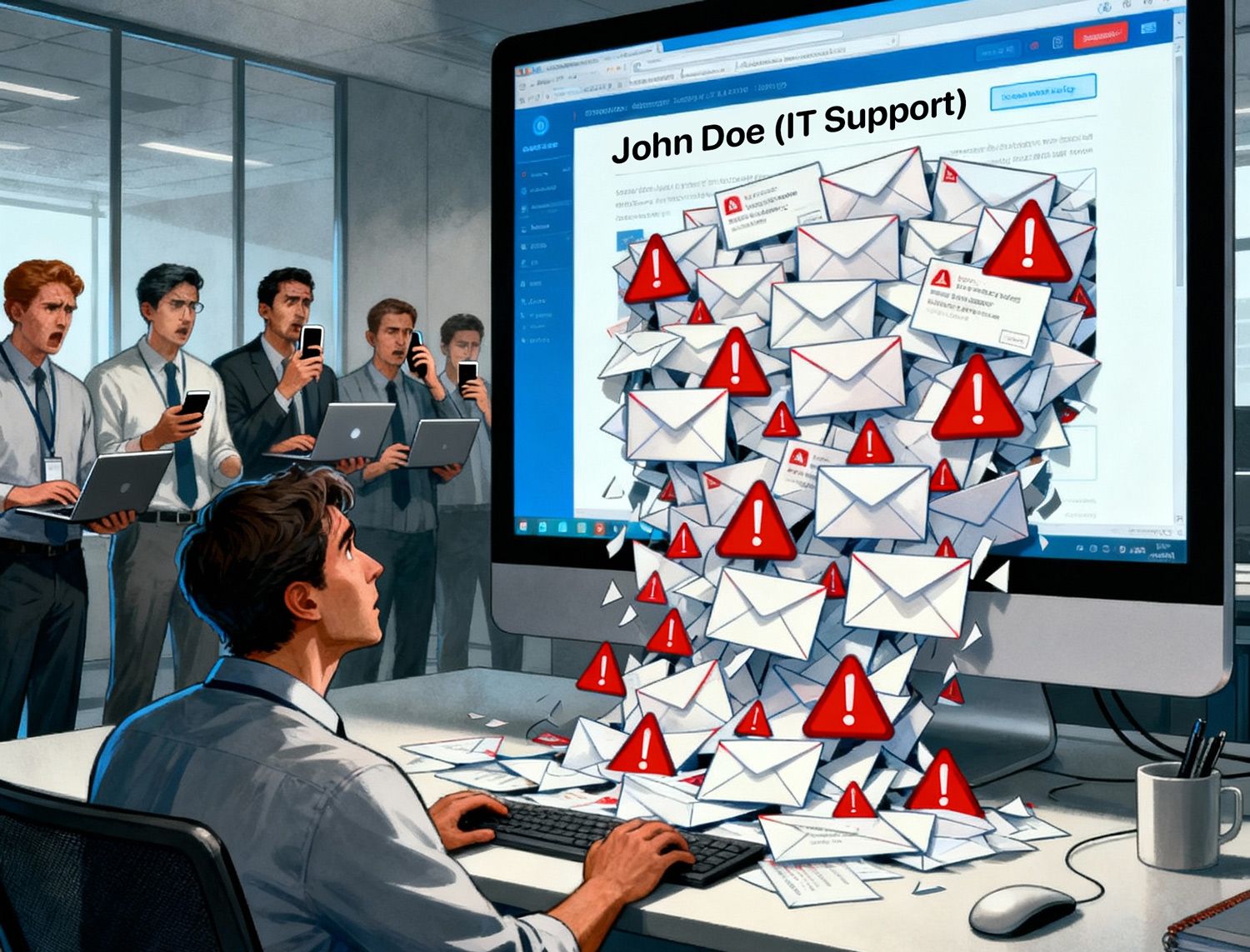
Paper-based approval workflows inside SAP-powered organizations are one of the most overlooked barriers to true digital transformation. If your organization has invested in SAP to manage finance, procurement, HR, or operations, yet internal approvals still travel by paper, courier, or email chain, this post explains why that gap exists, what it costs, and how to close it for good.
SAP Is Not a Workflow Platform — And That Is Okay
SAP is one of the most powerful enterprise resource planning systems in the world. It manages financial transactions, procurement cycles, inventory, payroll, and much more. But SAP was built to record and process business data, not to manage the human approval decisions that happen before that data ever reaches the system.
When a department head requests a budget reallocation, a procurement officer raises a purchase request, or an IT team needs emergency access to a production system, those decisions require structured human review, escalation, and sign-off. SAP records the outcome. It does not orchestrate the approval journey that leads to it.
This is not a flaw in SAP. It is simply outside its design scope. The problem arises when organizations assume that deploying SAP automatically digitizes everything — including the approval chains that sit upstream of every transaction.
The Assumption That Costs Organizations Millions
Many SAP project sponsors and senior leaders believe that going live on SAP means the organization is now digital. In practice, what often happens is that SAP digitizes the back end while the front end — the approval process — remains entirely manual.
Requests are printed, signed by hand, walked between offices, sent by courier to remote sites, returned for corrections, re-signed, and filed in physical folders. A process that should take hours can take weeks. The SAP system sits waiting while paper moves slowly through the organization.
The Hidden Cost of Manual Approvals in an SAP Environment

The financial cost of paper-based approvals is rarely measured directly, which is why it continues unchallenged. When you break it down, the numbers are significant.
- Printing and stationery costs accumulate across every department, every month
- Courier and dispatch fees apply every time a document needs to travel between offices or cities
- Employee time spent printing, signing, chasing, re-printing, and filing is rarely tracked but consistently high
- Delayed approvals push back procurement, hiring, project starts, and operational decisions
- Errors in paper forms require the entire cycle to restart from the beginning
- Lost documents cause compliance gaps and create audit risk
For a mid-sized organization running dozens of approval cycles per week across procurement, HR, finance, and operations, the combined cost of manual approvals can easily reach hundreds of thousands of rupees or dollars annually — without anyone realizing it.
The Decision Delay Problem
Beyond direct costs, the most damaging effect of paper-based approvals is decision delay. When a manager is traveling, on leave, or simply unreachable, a paper approval form sits on a desk waiting. Projects stall. Vendors wait. Employees grow frustrated. And the organization loses competitive ground because internal decisions cannot keep pace with business needs.
This is the gap that no SAP implementation, however well-executed, is designed to fill.
How Manual Workflows Undermine Your SAP ROI

Every SAP implementation represents a significant investment — in licenses, consulting fees, data migration, training, and change management. Organizations invest in SAP because they expect efficiency, accuracy, and speed. But when approval workflows remain manual, that return on investment is eroded in ways that are difficult to see but easy to feel.
- Procurement approvals delayed by paper mean purchase orders are raised late, affecting supplier relationships and delivery timelines
- HR approvals held up in manual chains slow down hiring, onboarding, and compensation changes
- Finance approvals stuck in physical routing create month-end bottlenecks and reporting delays
- IT change approvals managed by email or paper introduce risk, inconsistency, and audit exposure
The data that SAP needs to function accurately depends on timely decisions upstream. When those decisions are slow, the entire business rhythm slows with them. Your SAP system is only as fast as the slowest paper form in your approval chain.
Compliance and Audit Risk
Manual approval processes also create serious compliance exposure. Paper records can be lost, altered, or incomplete. Audit trails are inconsistent. Accountability is unclear. When regulators or internal auditors ask who approved a decision, when, and based on what information, paper-based systems rarely provide a satisfying answer.
This is a growing concern for organizations operating under ISO standards, local regulatory requirements, or internal governance frameworks.
What a Digital Approval Workflow Actually Looks Like

A properly digitized approval workflow replaces every paper step with a structured, trackable, and automated digital process. Here is what that looks like in practice:
- A requester submits a form through a digital portal, selecting the type of request and providing relevant details
- The system automatically routes the request to the correct approver based on predefined rules — department, value threshold, request category, or urgency level
- The approver receives an instant notification and can review and approve the request from any device, including a mobile phone
- If the approver does not act within a defined timeframe, the system automatically escalates to the next level
- Every action — submission, review, approval, rejection, comment — is recorded in a full audit trail
- The requester is kept informed at every stage without needing to chase anyone manually
- Once approved, the decision can trigger downstream actions, notifications, or integration with other systems
This is not a theoretical process. It is what TIKTING delivers through its configurable workflow engine, Change Management System, and mobile-enabled approval interface.
A Practical Checklist: Is Your Organization Ready to Digitize Approvals?

Use this checklist to assess where your organization stands today and what needs to change.
- Do any of your approval processes still involve printing and physically signing documents?
- Are approvals ever sent by courier between offices or locations?
- Do approvers miss or delay approvals because they are traveling or working remotely?
- Is there no central system showing which approvals are pending, with whom, and for how long?
- Do requesters need to follow up manually to find out the status of their submissions?
- Are approval records stored in physical files rather than a searchable digital system?
- Have you experienced audit findings or compliance gaps related to missing approval records?
- Does your organization lack a defined escalation path when an approver is unavailable?
- Are approval timelines measured in days or weeks rather than hours?
- Do different departments follow different, inconsistent approval processes?
If you answered yes to three or more of these questions, your organization has a measurable approval workflow problem — regardless of whether SAP is live and running.
Steps to Close the Gap
- Map your current approval workflows across all departments — procurement, HR, finance, IT, and operations
- Identify which steps are still manual and calculate the average time and cost per approval cycle
- Define the approval logic: who approves what, at what thresholds, in what sequence
- Select a platform that supports configurable workflows, mobile approvals, escalation rules, and full audit trails
- Run a pilot in one department, measure the improvement in cycle time and requester satisfaction, then scale across the organization
- Integrate with SAP where relevant so that approved requests automatically inform downstream transactions
TIKTING supports every step of this process, from initial workflow configuration through to live approval management and reporting.
Why TIKTING Is the Missing Layer Between SAP and Your Operations

TIKTING is an ESM and ITSM platform built to ITIL v4 standards. It is designed to manage service requests, approvals, change management, and operational workflows across every department in an organization. It does not replace SAP. It complements it by handling the approval and workflow layer that SAP was never designed to manage.
With TIKTING, organizations can:
- Configure approval workflows for any department without writing code
- Set routing rules based on request type, value, department, or urgency
- Enable managers and executives to approve requests from a mobile device, anywhere in the world
- Automate escalations so that no approval ever sits idle past its deadline
- Maintain a complete, searchable audit trail for every request and decision
- Provide requesters with real-time visibility into the status of their submissions
- Manage change requests through a structured Change Management System with risk assessment and CAB integration
For organizations that also need visibility into their IT infrastructure, Odysseus provides endpoint asset discovery that syncs directly into TIKTING, giving service and approval teams accurate, up-to-date asset data to inform their decisions.
You can explore more about how TIKTING supports enterprise service management across departments on the ITDEVTECH blog.
Key Takeaways

- SAP digitizes business transactions and data management. It does not digitize the human approval processes that precede those transactions.
- Paper-based approval workflows create hidden costs in printing, courier services, employee time, and delayed decisions that directly undermine SAP ROI.
- Manual approvals introduce compliance risk, audit gaps, and accountability problems that grow more serious over time.
- A digital approval workflow replaces paper with structured, automated, mobile-enabled processes that are faster, more accountable, and fully traceable.
- TIKTING provides the configurable workflow and approval management layer that bridges the gap between business requests and SAP-recorded outcomes.
- Organizations do not need to replace SAP to fix their approval problem. They need to complement it with a platform purpose-built for operational workflows.
If your organization has invested in SAP and still relies on paper approvals, the return on that investment is being diluted every day. The fix is not another SAP module. It is a dedicated workflow platform that handles the human side of every business decision — and that is exactly what TIKTING is built to do.