A broken IT service desk handover process is one of the quietest causes of SLA breaches, repeat escalations, and frustrated end users. When agents change shifts without a structured handoff, context gets lost, tickets stall, and the next team starts blind. This guide explains what a solid handover process looks like, why it matters, and exactly how to build one that keeps your support running without gaps.
Why Shift Handovers Break Down on Service Desks
Most service desks operate across multiple shifts, time zones, or on-call rotations. The problem is rarely the people — it is the absence of a repeatable, documented handover structure. When agents rely on memory, informal Slack messages, or a quick verbal summary at the door, critical information does not travel reliably from one shift to the next.
Common failure points include:
- Tickets that are mid-investigation with no status note
- Workarounds applied but not documented in the ticket
- Pending approvals or third-party callbacks that the incoming team does not know about
- Priority changes made verbally but never recorded
- Major incidents that are winding down but still need monitoring
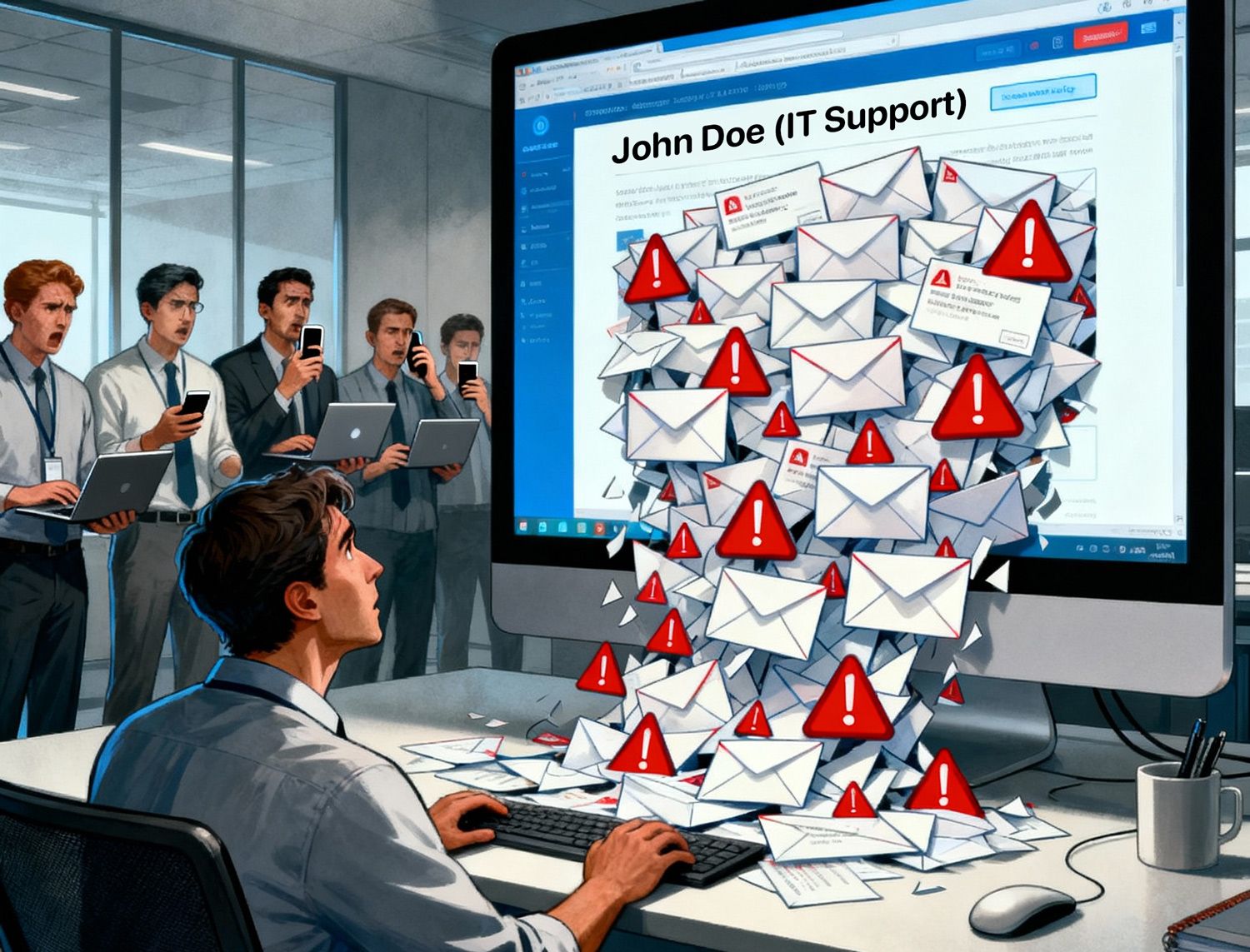
The result is duplicated effort at best and a full re-investigation at worst. End users get called back with the same questions they already answered. SLA clocks keep running while the incoming team catches up.
This is not just an operational inconvenience. For organisations managing IT service level agreements, a poor handover is a direct risk to SLA compliance and customer satisfaction scores.
What a Structured Handover Process Looks Like

A structured handover is a repeatable, documented exchange of operational context between outgoing and incoming teams. It covers three categories of information: live incidents and requests, situational awareness, and pending actions.
The Three Layers of Handover Information
Live incidents and requests are the most obvious layer. Every open ticket above a defined priority threshold should appear in the handover with a current status, the last action taken, and the next expected action.
Situational awareness covers things that affect how the desk operates but may not yet be a ticket. A scheduled maintenance window, a vendor outage, an unusual spike in a specific request type, or a VIP user with an open issue all belong here.
Pending actions are the third layer and the one most often skipped. These are the things that are waiting on something: a callback from a supplier, a change approval, a user who needs to be contacted when they return from leave. Without this layer, items fall through the cracks entirely.
Synchronous vs Asynchronous Handovers
Not every operation can run a live overlap period where outgoing and incoming agents brief each other in real time. Distributed teams, follow-the-sun models, and lean staffing often mean handovers happen asynchronously.
For synchronous handovers, a 10-15 minute structured briefing at shift change works well. Use a standard agenda: open P1/P2 incidents, tickets awaiting action, situational notes, pending callbacks.
For asynchronous handovers, the outgoing team must produce a written handover note before the shift ends. The incoming team reviews it before picking up any tickets. A shared handover log in your ITSM platform keeps this auditable and searchable.
Building Your Handover Process Step by Step

A handover process is only as good as the steps that make it repeatable. Here is a practical framework you can adapt to your environment.
- Define the handover window: decide how long before shift end the outgoing team must begin preparing the handover note, typically 15-30 minutes
- Set a priority threshold: agree which tickets always appear in the handover, for example all P1 and P2 tickets plus any ticket that has been open longer than a defined period
- Standardise the handover note format: include ticket ID, current status, last action, next action, owner, and any blockers
- Create a situational section: a short paragraph or bullet list covering anything affecting the desk that is not yet a ticket
- Log it in your ITSM platform: handover notes should live inside the tool your team already uses, not in a separate email chain or chat thread
- Require an acknowledgement: the incoming team lead should confirm receipt and flag any questions before the outgoing team fully signs off
- Review handovers in team meetings: treat recurring gaps or missed items as a process improvement signal, not a personal failure
If your team uses TIKTING as its service management platform, you can create a dedicated handover ticket type or use a recurring task template so the structure is enforced by the tool rather than relying on individual discipline.
Common Mistakes That Undermine Handovers

Even teams with a written handover policy run into predictable problems. Knowing these in advance lets you design them out.
- Handover notes written too late: if agents write the note in the last two minutes of their shift, quality drops sharply. Build the window into the schedule.
- Tickets updated but handover note not updated: agents sometimes resolve a ticket after writing the handover note and forget to remove it. A final scan before sign-off fixes this.
- No escalation path in the note: if a situation deteriorates overnight, the incoming team needs to know who to call and at what threshold. Escalation contacts belong in the handover.
- Handover treated as optional on quiet days: a quiet shift can turn into a busy one quickly. Consistent process matters more than volume.
- No feedback loop: if incoming agents never tell outgoing agents when a handover note was unclear or incomplete, quality never improves.
Teams that have already built strong IT escalation management practices will find it easier to embed escalation guidance into handover notes, because the paths are already defined.
Metrics to Track Handover Quality

You cannot improve what you do not measure. A few targeted metrics tell you whether your handover process is working.
- Post-handover ticket stall rate: the percentage of tickets that had no activity in the first 30 minutes of a new shift. A high rate suggests the incoming team is spending too long catching up.
- Re-contact rate: how often an end user is contacted more than once to provide information they already gave. This is a direct signal of context loss at handover.
- Handover note completion rate: what percentage of shifts produced a documented handover note. Anything below 100% is a process gap.
- SLA breach rate by shift boundary: compare breach rates on tickets that span a shift change against those that do not. A significant difference points to handover as a contributing factor.
Review these in your regular service desk reporting cycle. If you are not already tracking shift-boundary SLA performance separately, add it to your next reporting build.
Handover in Follow-the-Sun and MSP Environments

For organisations running follow-the-sun support or MSPs managing multiple client environments, handover complexity multiplies. You are not just passing context between agents — you are passing it across geographies, languages, and sometimes across different client contracts.
In these environments, the written handover note becomes even more critical because there is rarely an opportunity for a live briefing. A few additional practices help:
- Use a consistent template across all regions so incoming teams in any location know exactly where to find each piece of information
- Include client-specific context for MSPs: which clients have open issues, which have scheduled maintenance, and which have active escalations
- Store handover notes at the client or service level, not just at the agent level, so any incoming agent can pick up any client without needing to ask
- Run a weekly cross-region handover review to surface patterns that individual shift leads might not see
MSPs using TIKTING can use its multi-tenant structure to keep handover notes scoped to the right client environment while still giving team leads a cross-client view. You can learn more about how ITDEVTECH supports managed service providers at itdevtech.com/partners.
Key Takeaways
- A handover process must cover three layers: live tickets, situational awareness, and pending actions
- Both synchronous and asynchronous models can work — what matters is consistency and documentation
- Build the handover window into the schedule rather than leaving it to agent discretion
- Track post-handover stall rate and re-contact rate to measure whether the process is working
- In follow-the-sun and MSP environments, standardised templates and platform-level storage are essential
- Your ITSM platform should enforce the structure — TIKTING supports this through repeatable ticket templates and shift-level logging
Frequently Asked Questions
What is a service desk handover process?
A service desk handover process is a structured method for transferring operational context from an outgoing shift or team to an incoming one. It covers open incidents, pending actions, and situational awareness so the incoming team can continue support without gaps, duplicated effort, or loss of context that would otherwise cause delays or SLA breaches.
How long should a service desk handover take?
For a synchronous briefing, 10 to 15 minutes is a reasonable target for most desks. For asynchronous handovers, the outgoing team should spend 15 to 30 minutes preparing a written note before the shift ends. The goal is thoroughness without consuming so much time that agents cut corners on the final minutes of their shift.
Who owns the handover process on a service desk?
Ownership typically sits with the shift lead or team lead for each shift. They are responsible for ensuring the handover note is completed, reviewed, and acknowledged before the outgoing team signs off. Process-level ownership — defining the template, reviewing metrics, and driving improvements — belongs to the service desk manager.
What should a handover note always include?
At minimum, a handover note should include all open tickets above your priority threshold with current status and next action, any situational context affecting the desk, pending callbacks or approvals, and escalation contacts for any active major incidents. A consistent template enforced in your ITSM tool prevents items from being omitted.
How do you measure whether a handover process is working?
The most useful indicators are post-handover ticket stall rate, end-user re-contact rate, handover note completion rate, and SLA breach rate at shift boundaries. Comparing breach rates on tickets that cross a shift change against those resolved within a single shift quickly reveals whether handover quality is a contributing factor.
Does a handover process apply to on-call rotations as well?
Yes. On-call rotations carry the same risks as shift-based handovers, sometimes more so because the incoming on-call engineer may have been offline for hours. A brief written note covering any active incidents, recent changes, and known risks passed at the start of each on-call period follows the same principles as a full shift handover.