IT service management for internal audit teams is one of the most overlooked applications of ESM — yet audit departments face exactly the same workflow problems that broke IT teams years ago: requests arriving by email, findings tracked in spreadsheets, and no clear audit trail of who did what and when. This guide explains how applying ITSM principles to internal audit transforms request handling, finding management, and compliance reporting.
Why Internal Audit Teams Struggle Without a Structured Request Process
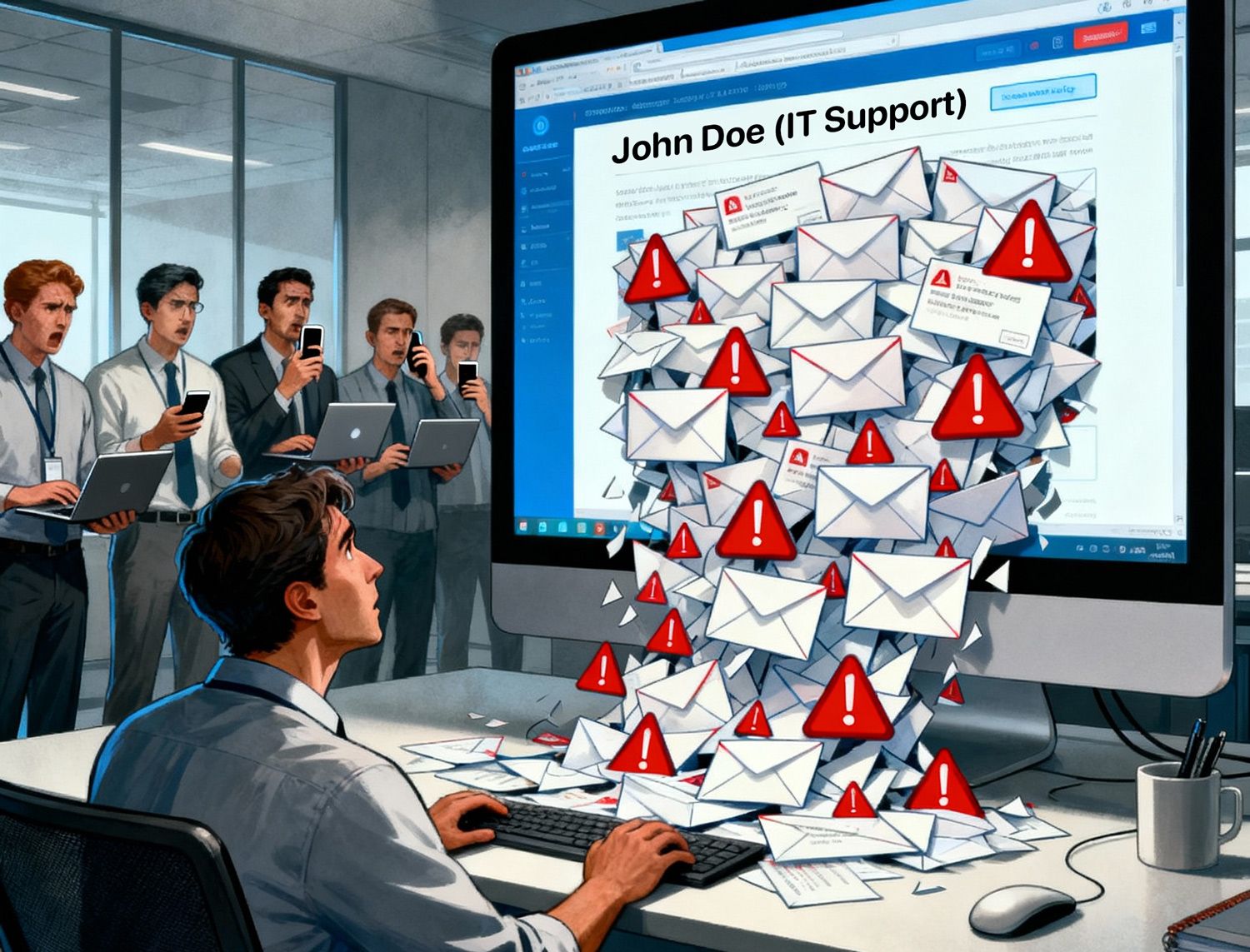
Most internal audit teams operate in a permanent state of reactive chaos. Audit requests come in through email threads, hallway conversations, and shared inboxes. Evidence requests go unanswered for days because no one owns the ticket. Finding remediation is tracked in a spreadsheet that three people maintain differently.
The consequences are real:
- Audit cycles run longer than they should because evidence collection is manual and uncoordinated
- Findings get lost or deprioritised because there is no formal follow-up mechanism
- Regulators and external auditors question the department's own control environment
- The audit team cannot report on workload, cycle times, or open finding age without pulling data manually
The root cause is the same one that drove IT teams to adopt service management platforms a decade ago: work is invisible, ownership is unclear, and there is no structured process beneath the activity.
Applying ITSM principles to internal audit does not mean turning auditors into IT staff. It means giving the audit function the same structured intake, assignment, tracking, and reporting capabilities that modern IT service desks take for granted.
What ITSM Brings to the Internal Audit Function

ITSM introduces four capabilities that directly solve audit team pain points.
Structured Request Intake
A service portal replaces the shared inbox. Business units submit audit requests, evidence packages, and remediation updates through a form that captures the right information upfront — entity, control area, deadline, owner, and priority. Every submission becomes a tracked ticket with a reference number, a clear owner, and an SLA.
Finding Lifecycle Management
Audit findings are not one-time events. They require initial logging, management response, remediation tracking, evidence review, and formal closure. Each of those steps maps naturally to a ticket workflow with defined statuses, assignees, and due dates. Nothing falls through the cracks because the system enforces the next step.
SLA and Deadline Visibility
Audit teams live by deadlines — regulatory filings, board reporting cycles, and remediation commitments. SLA rules in an ITSM platform can mirror those deadlines, trigger escalation alerts when evidence is overdue, and give the audit manager a live view of what is at risk before it becomes a problem. This is the same SLA logic that IT teams use for incident response, applied to audit cycles.
Reporting Without Spreadsheets
When every request and finding lives in a single platform, reporting becomes a query rather than a weekend project. Open findings by business unit, average remediation time, overdue evidence requests, and finding recurrence rates are all available on demand. That data supports the audit committee report, the annual audit plan, and conversations with external auditors.
Mapping Audit Workflows to ITSM Ticket Types

The ITSM ticket model is flexible enough to handle the distinct workflow types that internal audit generates.
Audit Requests as Service Requests
When a business unit requests an advisory review, a controls assessment, or a pre-implementation audit, that is a service request. It goes through a defined intake form, gets triaged by the audit manager, assigned to an auditor, and tracked through to delivery. The requestor gets status updates automatically rather than chasing by email.
Evidence Requests as Tasks
During fieldwork, auditors send dozens of evidence requests to control owners. In an ITSM platform, each evidence request becomes a child task linked to the parent audit engagement ticket. Control owners receive a portal notification, upload evidence directly, and close the task. The auditor sees completion status across all requests in one view, not across twenty email threads.
Findings as Incidents or Problem Records
An audit finding is structurally similar to an IT incident: something is not working as it should, it needs an owner, a root cause, a remediation plan, and a verified closure. Mapping findings to incident or problem ticket types gives the audit team a full lifecycle record — when the finding was raised, what management agreed to do, when remediation was completed, and whether the control failed again in a later cycle.
Remediation Tracking as Change Requests
When a finding requires a process change, a system configuration update, or a new control, that remediation is a change. Routing it through a change request workflow means the change is approved, scheduled, implemented, and verified — with a complete record that satisfies both internal and external auditors.
A Step-by-Step Process for Running Audit Engagements Through an ITSM Platform

This is a practical sequence for teams moving from email and spreadsheets to a structured ITSM workflow.
- Define your ticket types: agree which ticket category maps to audit requests, evidence requests, findings, and remediation actions before you configure anything
- Build intake forms: create a service portal form for each ticket type with mandatory fields that capture the information auditors need upfront — no back-and-forth to clarify scope
- Set SLAs per ticket type: evidence requests might carry a five-business-day SLA; critical findings might require a management response within ten days; configure breach alerts so nothing expires silently
- Configure assignment rules: route tickets automatically based on audit area, business unit, or auditor workload so the manager is not manually triaging every submission
- Link related records: connect evidence request tasks to their parent audit engagement, and link findings to the remediation change requests that close them — this gives you a complete audit trail in one place
- Build a finding dashboard: create a view that shows open findings by age, business unit, and risk rating so the audit committee report is always one click away
- Run a pilot engagement: choose one upcoming audit and run the entire cycle through the platform — intake, fieldwork tasks, findings, and remediation — before rolling out to the full team
- Train control owners on the portal: the biggest adoption risk is business-unit staff who prefer email; a short walkthrough of the portal and a clear explanation of why it matters reduces resistance significantly
Using the TIKTING service management platform, audit teams can configure all of these workflows without writing code, using the same platform the IT team already runs on — which makes cross-departmental visibility straightforward.
Compliance, Governance, and the Audit Trail Problem

Internal audit has a unique requirement that most departments do not: the department itself is subject to audit. External auditors, regulators, and audit committees will periodically review how the internal audit function operates. If the team cannot demonstrate a consistent, documented process for managing findings and evidence, that is itself a control weakness.
An ITSM platform solves this by making the process the system. Every action — submission, assignment, status change, comment, evidence upload, and closure — is timestamped and attributed to a named user. That log is the audit trail. It is not something the team has to reconstruct after the fact; it exists automatically as a byproduct of doing the work in the platform.
This also supports IT compliance and governance requirements when audit findings relate to IT controls. If a finding identifies a misconfigured asset or an access control gap, linking the finding ticket to the relevant configuration item in the CMDB — discoverable through Odysseus — connects the audit record to the technical reality it describes.
Key Takeaways

- Internal audit teams face the same workflow problems that drove IT to adopt ITSM: invisible work, unclear ownership, and no structured process
- Mapping audit requests, evidence tasks, findings, and remediation actions to ITSM ticket types gives every piece of work a clear owner, deadline, and status
- SLA rules enforce audit deadlines and trigger escalation before commitments are missed
- A complete audit trail is a byproduct of running work through the platform — no reconstruction required
- The same ITSM platform the IT team uses can serve the audit function, enabling cross-departmental visibility and reducing tool sprawl
- TIKTING supports configurable workflows, SLA management, and a service portal that internal audit teams can adopt without IT involvement in day-to-day operations
If your audit team is still running findings in a spreadsheet, the fastest path to a structured process is an ESM platform already in use elsewhere in the organisation. Explore what TIKTING can do for your audit function, or see how Odysseus connects asset discovery to the findings that relate to IT controls.
Frequently Asked Questions
What is ITSM for internal audit?
ITSM for internal audit means applying IT service management principles — structured intake, ticket-based tracking, SLA enforcement, and reporting — to audit department workflows. Instead of managing audit requests, evidence collection, and findings through email and spreadsheets, the team uses a service management platform to give every piece of work an owner, a deadline, and a documented history.
How does an ITSM platform improve audit finding management?
Each finding becomes a tracked ticket with defined statuses, an assigned owner, a management response deadline, and a remediation due date. The platform enforces the workflow, sends alerts when deadlines approach, and maintains a complete record of every action taken. This eliminates the risk of findings being forgotten or closed without verified remediation.
Can internal audit use the same ITSM platform as the IT team?
Yes, and it is often the most efficient approach. A modern ESM platform like TIKTING supports multiple departments on a single instance, each with their own workflows, forms, and SLAs. Sharing a platform with IT also enables cross-departmental visibility — useful when audit findings relate to IT controls or assets.
What ticket types should internal audit configure in an ITSM platform?
Most audit teams need four ticket types: service requests for audit engagements and advisory work, tasks for evidence requests during fieldwork, incident or problem records for audit findings, and change requests for remediation actions. Each type carries its own workflow, SLA, and required fields.
How does ITSM support regulatory compliance for the audit function?
Every action in an ITSM platform is automatically timestamped and attributed to a named user. This creates a complete, tamper-evident audit trail of how the department managed each engagement, finding, and remediation — without any manual documentation effort. Regulators and external auditors can review this log as evidence of a controlled, consistent process.
Who owns the ITSM implementation for an internal audit team?
Ownership typically sits with the chief audit executive or audit manager, with implementation support from the IT team that manages the ITSM platform. Because modern ESM platforms are configurable through administration interfaces rather than code, the audit team can own day-to-day workflow configuration once the platform is set up.