IT Service Desk Ticket Templates: Build a Library That Saves Hours in 2026

September 28, 2026
7 min read

Learn how to build an IT service desk ticket template library that cuts resolution time, reduces agent back-and-forth, and keeps your intake consistent in 2026.

IT service desk ticket templates are one of the most underused levers for cutting resolution time, reducing back-and-forth, and keeping your team consistent — yet most service desks either skip them entirely or let them go stale. This guide walks you through why structured templates matter, how to design them well, and how to build a library your agents and end users will actually use in 2026.

Why Poor Ticket Intake Costs Your Team More Than You Think

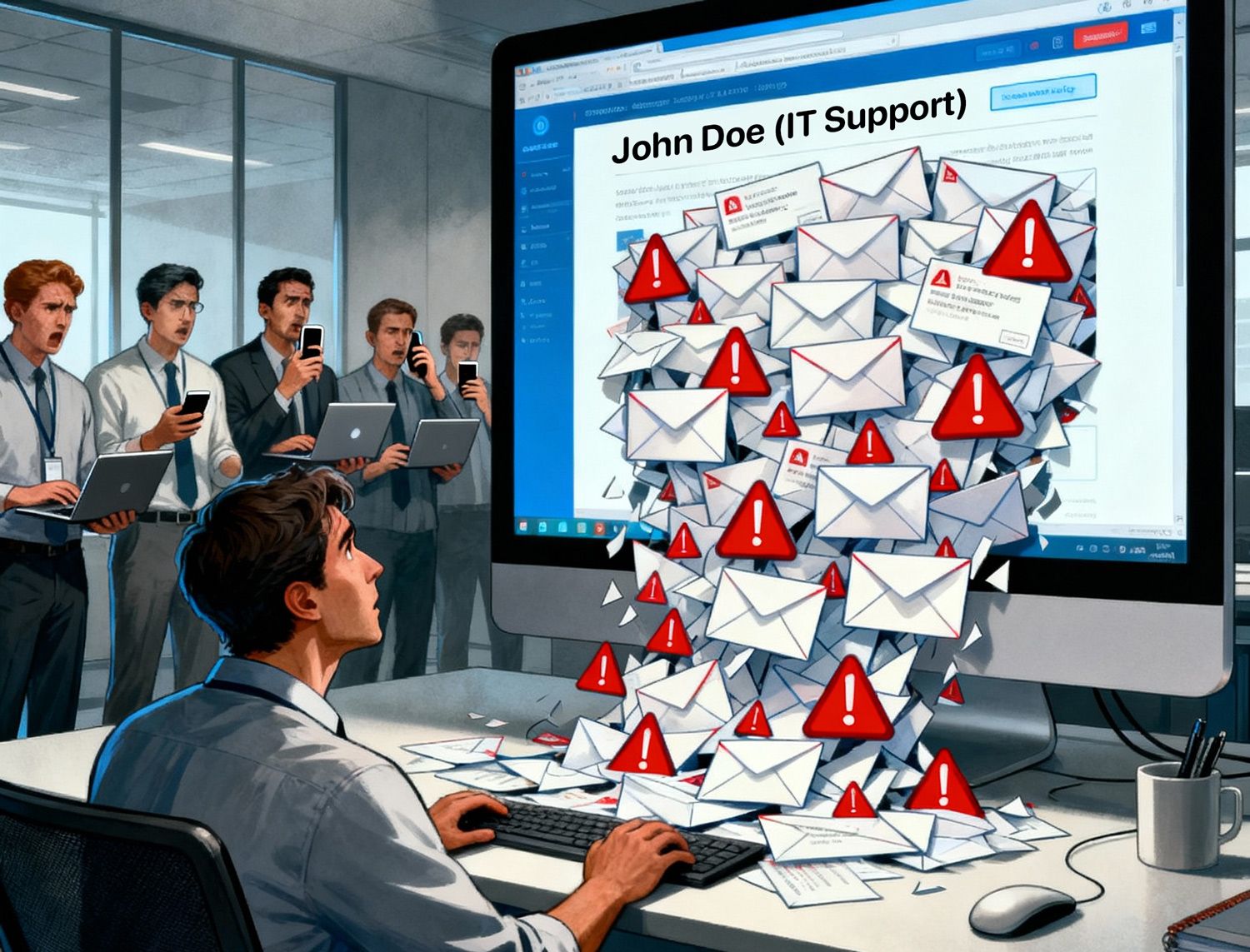
Every ticket that arrives without enough information adds at least one round-trip to the resolution process. An agent reads a vague request, asks a clarifying question, waits for a reply, and only then starts working. Multiply that by dozens of tickets a day and you have a hidden tax on your team's capacity.

The problem is almost never the requester's fault. Most end users do not know what information an agent needs to resolve their issue. Without a structured intake form or template, they describe the symptom in whatever way feels natural — which is rarely the way that helps.

Common consequences of unstructured ticket intake:

  • Agents spend time chasing missing details instead of resolving issues
  • Tickets get miscategorised because the category depends on context that was never captured
  • SLA clocks keep running while the team waits for a reply
  • Requesters feel ignored because nothing visibly happens on their ticket

Structured ticket templates solve this by asking the right questions at the point of submission — before the ticket ever reaches an agent. That is the shift worth making.

What Makes a Good Ticket Template

Blog image

A good ticket template is not just a list of fields. It is a guided conversation that draws out exactly the information an agent needs to start working without asking follow-up questions.

Capture context, not just symptoms

The most common mistake is asking only "what is the problem?" A better template asks:

  • What were you trying to do when the issue occurred?
  • What device or application is involved?
  • What error message or behaviour did you see?
  • Has this happened before, and if so, when?
  • What is the business impact if this is not resolved today?

Each answer eliminates at least one follow-up question.

Keep it short enough to complete

Templates that are too long get abandoned or filled in carelessly. Aim for five to eight fields per template. If a category genuinely requires more, consider breaking it into two templates for different sub-types.

Match the template to the ticket type

A password reset request needs different fields than a new software installation or a hardware fault report. Building category-specific templates means each one stays lean and relevant rather than trying to cover every scenario with a single generic form.

Use conditional logic where your platform supports it

Some ITSM platforms let you show or hide fields based on earlier answers. For example, if a requester selects "laptop" as the device type, a follow-up field for the asset tag appears. If they select "cloud application," that field is hidden. This keeps the form short for simple requests while capturing depth for complex ones. The TIKTING service management platform supports this kind of dynamic form logic, so templates adapt to the requester's answers rather than dumping every possible field on screen at once.

How to Build Your Ticket Template Library

Blog image

Building a library from scratch can feel overwhelming. The practical approach is to start with your highest-volume categories and expand from there.

Step 1 — Audit your current ticket data

Pull three to six months of closed tickets. Group them by category and look for the top ten to fifteen request types by volume. These are your first targets for templates.

Step 2 — Identify the information that actually resolved each type

For each high-volume category, look at the tickets that resolved fastest. What information did those tickets have that the slower ones did not? That gap tells you exactly what fields to add to the template.

Step 3 — Draft templates with your frontline agents

Agents know what they need to know. Involve them in drafting. A short workshop where agents list their top three "I always have to ask this" questions for each category will give you a solid first draft in an hour.

Step 4 — Write clear field labels and helper text

A field labelled "Device" is less useful than "Device name or asset tag (check the sticker on the bottom of your laptop)." Helper text reduces errors and speeds up completion.

Step 5 — Publish and measure

Deploy the templates through your IT self-service portal and track two metrics for each template: average first-reply time and average resolution time. Compare against the same category before templates were in place. If resolution time drops and agent follow-up questions fall, the template is working.

Step 6 — Review quarterly

Templates go stale as your environment changes. A quarterly review — adding new fields when recurring questions emerge, removing fields that nobody uses — keeps the library current.

Template Categories Worth Building First

Blog image

Not every request type needs a template on day one. Prioritise the categories where missing information most often delays resolution.

High-priority categories for most service desks:

  • Access and permissions requests (who needs access, to what system, at what level, approved by whom)
  • New hardware or software requests (business justification, budget code, required-by date)
  • Application errors (application name, version, steps to reproduce, error message text, screenshot)
  • Network connectivity issues (location, device type, wired or wireless, other devices affected)
  • Account lockouts and password resets (username, system, urgency level)
  • Onboarding and offboarding requests (start or leave date, role, manager, systems required or to be revoked)

If your organisation uses Odysseus for endpoint asset discovery, you can pre-populate asset fields automatically when a requester logs in — the template pulls their assigned device details from the asset record, removing one of the most common sources of missing information.

Maintaining Template Quality Over Time

Blog image

A library of templates is only valuable if it stays accurate and gets used. Maintenance is where most teams fall short.

Assign template ownership

Each template category should have an owner — typically the team lead for that request type. Owners are responsible for reviewing their templates when the underlying process changes and flagging when agents report that a template is generating unhelpful responses.

Track template abandonment

If requesters start a template-driven form but submit without completing all fields, or abandon it entirely, that is a signal the template is too long, confusing, or asking for information the requester does not have. Most ITSM platforms log form completion behaviour. Review abandonment rates alongside resolution metrics.

Collect agent feedback systematically

Add a lightweight feedback mechanism — a single question after ticket closure asking the resolving agent whether the intake information was sufficient. Aggregate this monthly and use it to drive template updates. This creates a feedback loop between the people doing the work and the people designing the intake process.

When a template category has a known self-service fix, link the relevant knowledge base article directly in the template confirmation screen. Some requesters will resolve their own issue before the ticket even reaches an agent, which reduces volume without reducing satisfaction. You can read more about building that self-service layer in the ITDEVTECH blog.

Frequently Asked Questions

What is an IT service desk ticket template?

An IT service desk ticket template is a pre-structured intake form that guides requesters to provide the specific information an agent needs to resolve a particular type of request. Templates replace blank free-text fields with targeted questions, reducing back-and-forth and speeding up resolution. They are typically configured per ticket category within an ITSM platform.

How many ticket templates does a service desk need?

Most service desks can cover the majority of their volume with ten to twenty well-designed templates. Start with your five highest-volume categories, measure the impact, and expand from there. More templates are not always better — a large library that nobody maintains creates confusion and inconsistency over time.

Who should own ticket template design and maintenance?

Template design works best as a collaboration between service desk managers, frontline agents, and process owners. Agents know what information they need; managers know what drives SLA performance; process owners know when underlying workflows change. Assign a named owner per template category and schedule quarterly reviews.

How do ticket templates differ from ticket forms?

The terms are often used interchangeably, but a ticket form is the technical container of fields, while a template may also include pre-filled values, default assignments, priority settings, and linked knowledge articles. A good ticket template uses a form as its foundation but adds logic and context that makes the ticket actionable the moment it arrives.

Can ticket templates work for agent-created tickets too?

Yes. When an agent creates a ticket on behalf of a user — for example, during a phone call — templates give them a structured checklist of what to capture. This is especially useful for new agents who are still learning what information different request types require. Agent-side templates also improve consistency across the team.

How do you measure whether a ticket template is working?

Track average first-reply time, average resolution time, and the number of agent comments asking for more information, before and after introducing a template for a given category. A reduction in all three signals the template is capturing what agents need. Also monitor form abandonment rates to catch templates that are too long or confusing.

Key Takeaways

  • Unstructured ticket intake is a hidden cost — every missing field adds at least one round-trip to resolution
  • Good templates are short, category-specific, and ask for context, not just symptoms
  • Build your library by starting with your ten to fifteen highest-volume request categories
  • Involve frontline agents in drafting — they know what they always have to ask
  • Measure first-reply time, resolution time, and abandonment rates to validate each template
  • Assign named owners and review quarterly to keep templates current
  • Pair templates with your self-service portal and knowledge base to deflect tickets before they need agent time

TIKTING supports dynamic form logic, category-specific templates, and integration with Odysseus asset data — so templates can pre-populate device details automatically and give agents the context they need from the first moment a ticket arrives.

Further Reading

Related Articles

IT Service Desk Ticket Templates: Build Faster, Consistent Intake in 2026

IT Service Desk Ticket Templates: Build Faster, Consistent Intake in 2026

Incomplete tickets waste agent time and inflate MTTR. Learn how to build a ticket template library that captures the right data at intake, every time.

IT Service Desk Ticket Templates: Build Faster, Cleaner Intake in 2026

IT Service Desk Ticket Templates: Build Faster, Cleaner Intake in 2026

Vague tickets waste agent time. Learn how to design IT service desk ticket templates that capture the right information at intake and cut resolution time.

IT Service Desk Quality Assurance: Build a QA Process That Improves Every Ticket

IT Service Desk Quality Assurance: Build a QA Process That Improves Every Ticket

Learn how to build an IT service desk QA process that samples tickets, scores quality consistently, and turns coaching into real, measurable service improvement.

IT Service Desk Ticket Workflow: Build a Process That Scales in 2026

IT Service Desk Ticket Workflow: Build a Process That Scales in 2026

A broken ticket workflow is why SLAs slip and agents burn out. Learn the six stages of a scalable IT service desk ticket workflow and how to build one that holds up.

IT Service Desk Ticket Categorization: Build a System That Works in 2026

IT Service Desk Ticket Categorization: Build a System That Works in 2026

Poor ticket categorization corrupts your routing, SLAs, and reporting. Learn how to design, enforce, and maintain a scheme that works in 2026.

IT Service Desk Ticket Escalation Paths: Build Smarter Routes in 2026

IT Service Desk Ticket Escalation Paths: Build Smarter Routes in 2026

Poorly defined escalation paths cause SLA breaches and agent burnout. Learn how to map, document, and automate ticket escalation routes that actually work.

IT Service Desk Ticket Auditing: How to Stay Accountable in 2026

IT Service Desk Ticket Auditing: How to Stay Accountable in 2026

Learn how to build a repeatable IT service desk ticket auditing process that improves quality, supports compliance, and keeps your ITSM data trustworthy in 2026.

IT Service Desk Ticket Deflection: How to Reduce Volume in 2026

IT Service Desk Ticket Deflection: How to Reduce Volume in 2026

Learn how to build an IT service desk ticket deflection strategy in 2026 — covering self-service portals, knowledge bases, chatbots, and automation.

IT Service Desk Ticket Ownership: How to Fix Accountability Gaps in 2026

IT Service Desk Ticket Ownership: How to Fix Accountability Gaps in 2026

Ticket ownership gaps cause SLA breaches and silent queues. Learn how to define accountability, enforce handovers, and build a process that keeps every ticket moving.

IT Service Desk Ticket Workflow: Design a Flow That Resolves Faster in 2026

IT Service Desk Ticket Workflow: Design a Flow That Resolves Faster in 2026

A poorly designed ticket workflow stalls resolutions and frustrates users. Learn how to define states, automate routing and embed approvals that close tickets faster.

IT Service Desk Training Plan: Build Skills That Stick in 2026

IT Service Desk Training Plan: Build Skills That Stick in 2026

A structured IT service desk training plan builds skills that stick. Learn how to design, deliver, and measure training that improves FCR, reduces escalations, and keeps SLAs on tr

IT Service Desk Continuous Improvement: Build a Cycle That Sticks in 2026

IT Service Desk Continuous Improvement: Build a Cycle That Sticks in 2026

IT service desk continuous improvement stalls without a feedback loop. Learn a practical four-stage cycle to measure, act, and close the loop in 2026.

IT Service Desk Ticket Reassignment: How to Reduce It in 2026

IT Service Desk Ticket Reassignment: How to Reduce It in 2026

High ticket reassignment rates slow resolution and frustrate users. Learn the root causes, how to measure them, and a practical process to reduce reassignment in 2026.

IT Service Desk Ticket Reopen Rate: How to Reduce It in 2026

IT Service Desk Ticket Reopen Rate: How to Reduce It in 2026

A high ticket reopen rate signals broken resolutions. Learn what drives reopens, how to measure them correctly, and the step-by-step process to reduce them in 2026.

IT Service Desk Ticket Closure: How to Close Tickets Right in 2026

IT Service Desk Ticket Closure: How to Close Tickets Right in 2026

A poor ticket closure process drives reopen rates up and CSAT down. Learn the steps, checklist, and metrics to close tickets right in 2026.

IT Service Desk On-Call Management: Build a Process That Works in 2026

IT Service Desk On-Call Management: Build a Process That Works in 2026

Ad-hoc on-call coverage breaks under pressure. Learn how to design a structured IT service desk on-call process that keeps services covered in 2026.

IT Service Desk Ticket Aging: How to Stop Stale Tickets in 2026

IT Service Desk Ticket Aging: How to Stop Stale Tickets in 2026

Aged tickets quietly destroy SLA compliance and user trust. Learn how to measure ticket aging, find the root causes, and build a process that keeps every ticket moving.

IT Service Desk Workflow Automation: Build Smarter Flows in 2026

IT Service Desk Workflow Automation: Build Smarter Flows in 2026

Learn which IT service desk workflows to automate first in 2026, how to design them step by step, and how to measure real impact without common pitfalls.

IT Service Desk Ticket Volume: How to Reduce It in 2026

IT Service Desk Ticket Volume: How to Reduce It in 2026

IT service desk ticket volume keeps climbing for most teams. Here's how to measure what's driving it and reduce it with self-service, automation, and problem management.

IT Service Desk Triage: Build a Process That Resolves Faster

IT Service Desk Triage: Build a Process That Resolves Faster

Learn how to build an IT service desk triage process that classifies, prioritises and routes every ticket correctly — so SLAs are met and nothing critical gets missed.

IT Service Desk Ticket Routing: How to Get Every Ticket to the Right Team Fast

IT Service Desk Ticket Routing: How to Get Every Ticket to the Right Team Fast

Ticket routing failures cause SLA breaches and wasted triage time. Learn how to build a routing model that gets every ticket to the right team automatically.

ITSM for IT Service Desk Managers: Build a Resilient Team in 2026

ITSM for IT Service Desk Managers: Build a Resilient Team in 2026

Understaffed shifts and skill silos kill SLA performance. Learn how to apply ITSM workforce management to build a resilient, well-balanced service desk team in 2026.

ITSM for IT Service Desk Teams: Build a High-Performing Desk in 2026

ITSM for IT Service Desk Teams: Build a High-Performing Desk in 2026

Struggling with ticket chaos and SLA breaches? Learn how to structure, measure, and continuously improve your IT service desk in 2026 with practical ITIL v4 guidance.

IT Ticket Prioritization: How to Triage Service Desk Requests Right

IT Ticket Prioritization: How to Triage Service Desk Requests Right

Ad hoc ticket triage causes SLA breaches and burned-out teams. Learn how to build an ITIL-aligned priority framework that scales with your service desk.

IT Service Desk Reporting: Build Reports That Drive Real Improvement

IT Service Desk Reporting: Build Reports That Drive Real Improvement

Most service desk reports produce numbers, not decisions. Learn how to build IT service desk reports that drive real improvement across every audience level.

IT Service Desk Ticket Backlog: How to Clear It and Keep It Clear

IT Service Desk Ticket Backlog: How to Clear It and Keep It Clear

A growing ticket backlog signals a broken support process. Learn how to audit, clear, and prevent your IT service desk backlog with practical steps.

IT Service Desk Knowledge Management Gaps: How to Fix Them in 2026

IT Service Desk Knowledge Management Gaps: How to Fix Them in 2026

Knowledge gaps silently drain service desk performance. Learn how to audit, close, and prevent them with a practical process built for 2026.

IT Service Desk Knowledge Management Audit: A Practical 2026 Guide

IT Service Desk Knowledge Management Audit: A Practical 2026 Guide

Learn how to audit your service desk knowledge base in 2026 — cover gaps, fix stale articles, assign owners, and build a review cycle that keeps it accurate.

IT Service Desk Root Cause Analysis: A Practical Guide for 2026

IT Service Desk Root Cause Analysis: A Practical Guide for 2026

Learn how to build a repeatable IT service desk root cause analysis process in 2026 — stop recurring incidents, reduce ticket volume, and drive real improvement.

IT Service Desk Performance Review: How to Run One That Drives Real Change in 2026

IT Service Desk Performance Review: How to Run One That Drives Real Change in 2026

Learn how to run an IT service desk performance review that drives real change — with the right metrics, a structured agenda, and actions that actually get completed.

IT Service Desk Handover Process: How to Keep Support Running 24/7

IT Service Desk Handover Process: How to Keep Support Running 24/7

A broken shift handover causes SLA breaches and lost context. Learn how to build a repeatable IT service desk handover process that keeps support running 24/7.

IT Service Desk Agent Burnout: How to Spot and Fix It in 2026

IT Service Desk Agent Burnout: How to Spot and Fix It in 2026

IT service desk agent burnout drains your best people before you notice. Learn the measurable warning signs, root causes, and a practical 2026 action plan to fix it.

IT Service Desk Customer Satisfaction: How to Measure and Improve CSAT in 2026

IT Service Desk Customer Satisfaction: How to Measure and Improve CSAT in 2026

Learn how to measure IT service desk CSAT properly, interpret the scores, and take practical steps to improve user satisfaction in 2026 without adding headcount.

IT Service Desk Benchmarking: How to Measure Up in 2026

IT Service Desk Benchmarking: How to Measure Up in 2026

Learn how to run an IT service desk benchmarking exercise in 2026 — which metrics matter, how to source peer data, and how to turn results into a real improvement roadmap.

IT Service Desk SLA Breach: How to Prevent and Recover Fast in 2026

IT Service Desk SLA Breach: How to Prevent and Recover Fast in 2026

SLA breaches damage user trust fast. Learn why they happen, how to prevent them with the right process design, and how to recover cleanly when they do occur.

IT Service Desk Cost Reduction: How to Cut Costs Without Cutting Quality in 2026

IT Service Desk Cost Reduction: How to Cut Costs Without Cutting Quality in 2026

IT service desk cost reduction in 2026: where costs come from, which levers cut spend without hurting quality, and a practical checklist to get started.

IT Service Desk Omnichannel Support: How to Unify Every Channel in 2026

IT Service Desk Omnichannel Support: How to Unify Every Channel in 2026

Fragmented channels inflate backlogs and slow resolution. Learn how to unify email, chat, phone and portal into one omnichannel IT service desk queue in 2026.

IT Service Desk Chat Support: How to Do It Right in 2026

IT Service Desk Chat Support: How to Do It Right in 2026

Chat support on your service desk only works when it is wired into your ticketing workflow. Here is how to design, launch, and measure it right in 2026.

IT Service Desk Knowledge Base Metrics: What to Measure in 2026

IT Service Desk Knowledge Base Metrics: What to Measure in 2026

Measuring your knowledge base is the only way to know if it's deflecting tickets. Learn the metrics that matter and how to act on them in 2026.

IT Service Desk Staffing: How to Right-Size Your Team in 2026

IT Service Desk Staffing: How to Right-Size Your Team in 2026

Right-sizing your IT service desk team is harder than it looks. Learn how to calculate headcount, spot staffing problems early, and build a model that scales.

ITSM for IT Service Continuity: Build a Resilient Recovery Plan in 2026

ITSM for IT Service Continuity: Build a Resilient Recovery Plan in 2026

IT service continuity planning fails when it's untested and out of date. Learn how to use ITSM practices to build a recovery plan that actually works in 2026.

IT Onboarding and Offboarding: A Service Desk Process Guide

IT Onboarding and Offboarding: A Service Desk Process Guide

Ad hoc onboarding and offboarding leaves accounts open and assets untracked. Learn how to build a repeatable, ITIL-aligned process that closes both gaps.

IT Service Catalog: How to Build One That Actually Gets Used

IT Service Catalog: How to Build One That Actually Gets Used

Learn how to build an IT service catalog users actually adopt — with the right structure, intake forms, fulfillment workflows, SLA targets, and a quarterly review process.

IT Release Management: A Practical Guide for Service Desk Teams

IT Release Management: A Practical Guide for Service Desk Teams

A poorly managed release floods your service desk with incidents. This practical guide covers the full release management process, common mistakes, and a step-by-step checklist.

IT First Contact Resolution: How to Improve FCR on Your Service Desk

IT First Contact Resolution: How to Improve FCR on Your Service Desk

Low first contact resolution drains your service desk. Learn what causes FCR to drop and the step-by-step process to improve it across your team.

IT Service Desk Shift-Left Strategy: Reduce Escalations and Costs

IT Service Desk Shift-Left Strategy: Reduce Escalations and Costs

Learn how to build a practical shift-left strategy that reduces escalations, improves first-contact resolution, and cuts service desk costs — step by step.

IT Service Desk Metrics That Actually Matter in 2026

IT Service Desk Metrics That Actually Matter in 2026

Tracking the wrong service desk metrics wastes time and hides real problems. Learn which KPIs actually improve outcomes and how to build a reporting cadence that drives action.

ITSM for IT Service Portfolio Management: Govern Services in 2026

ITSM for IT Service Portfolio Management: Govern Services in 2026

IT service portfolio management governs every service IT delivers — pipeline, live, and retired. Learn how to build, measure, and sustain the process in 2026.

ITSM for Executive Leadership: Build a Business Case in 2026

ITSM for Executive Leadership: Build a Business Case in 2026

Learn how to build an ITSM business case that wins executive approval — with financial, risk, and compliance arguments that speak the language of CIOs and CFOs.

ITSM for IT Security Operations: Align SecOps and Service Management in 2026

ITSM for IT Security Operations: Align SecOps and Service Management in 2026

Learn how to connect SecOps alerts to ITSM workflows — incident management, change enablement, and CMDB data — to close compliance gaps and speed up response.

CMDB Best Practices: How to Build and Maintain a Clean CMDB

CMDB Best Practices: How to Build and Maintain a Clean CMDB

A stale CMDB costs your team time and trust. Learn how to scope, build, and maintain a clean CMDB with practical steps and a maintenance checklist.

IT Knowledge Management: Build a Self-Service KB That Reduces Tickets

IT Knowledge Management: Build a Self-Service KB That Reduces Tickets

A dusty wiki nobody reads won't reduce your ticket queue. Learn how to build and maintain a self-service knowledge base that actually deflects tickets.

IT Escalation Management: How to Build a Process That Works

IT Escalation Management: How to Build a Process That Works

A weak escalation process is behind most missed SLAs and burned-out teams. Learn how to design clear tiers, triggers, and workflows that actually hold up.

IT Configuration Management: Build a CMDB That Drives Real Value

IT Configuration Management: Build a CMDB That Drives Real Value

Most CMDBs fail within months of launch. Learn how to design, populate, and maintain a configuration management practice that teams actually trust and use.

IT Continual Improvement: How to Build a Process That Sticks

IT Continual Improvement: How to Build a Process That Sticks

Continual improvement is central to ITIL v4 but rarely done well. Learn how to build a register, prioritise work, and embed improvement into everyday ITSM.

ITSM for HR Teams: How to Run HR Service Delivery Like IT

ITSM for HR Teams: How to Run HR Service Delivery Like IT

HR teams drown in email requests with no SLAs, no tracking, and no self-service. Learn how ITSM principles transform HR service delivery step by step.

IT Self-Service Portal Best Practices: Reduce Ticket Volume in 2026

IT Self-Service Portal Best Practices: Reduce Ticket Volume in 2026

Most self-service portals go unused. Learn practical steps to design, populate and promote a portal that genuinely deflects tickets and improves service desk efficiency.

ITSM for Customer Support Teams: Deliver Better Service in 2026

ITSM for Customer Support Teams: Deliver Better Service in 2026

Customer support teams face the same problems ITSM solves. Learn how to apply ITIL practices, SLAs, and automation to deliver faster, more consistent support.

ITSM for IT Change Failure: How to Reduce Failed Changes in 2026

ITSM for IT Change Failure: How to Reduce Failed Changes in 2026

High change failure rate costs you time, trust, and SLA compliance. Learn the root causes, ITIL v4 controls, and a practical checklist to reduce failed changes in 2026.

ITSM for MSPs: Manage Multiple Clients Without the Chaos in 2026

ITSM for MSPs: Manage Multiple Clients Without the Chaos in 2026

MSPs face unique ITSM challenges: multi-client SLAs, isolated CMDBs, and constant context-switching. This guide covers how to run a scalable, structured MSP service operation.

ITSM for IT Procurement: Cut Lead Times and Control Costs in 2026

ITSM for IT Procurement: Cut Lead Times and Control Costs in 2026

Learn how to apply ITSM discipline to IT procurement — structured intake, approval workflows, SLAs, and asset registration — to cut lead times and stay audit-ready.

ITSM for IT Asset Disposal: Stay Compliant and Secure in 2026

ITSM for IT Asset Disposal: Stay Compliant and Secure in 2026

IT asset disposal carries real compliance and security risk. Learn how to build an ITSM-driven disposal process that protects data and keeps your CMDB clean.

ITSM for IT Operations Teams: Manage Infrastructure Requests and Incidents in 2026

ITSM for IT Operations Teams: Manage Infrastructure Requests and Incidents in 2026

IT operations teams juggling incidents, changes, and asset sprawl need ITSM structure. Learn how to apply ITIL practices, build a service catalog, and keep your CMDB accurate in 20

ITSM for IT Compliance and Governance: Stay Audit-Ready in 2026

ITSM for IT Compliance and Governance: Stay Audit-Ready in 2026

Learn how a structured ITSM approach closes the compliance gaps auditors find most often — from undocumented changes to untracked assets — and how to stay audit-ready in 2026.

ITSM for Project Management Offices: Govern Requests and Delivery in 2026

ITSM for Project Management Offices: Govern Requests and Delivery in 2026

PMOs still running on email and spreadsheets pay in missed deadlines and audit gaps. Learn how ITSM principles transform PMO intake, change control, and governance.

ITSM for Procurement Teams: Manage Requests and Approvals in 2026

ITSM for Procurement Teams: Manage Requests and Approvals in 2026

Procurement still runs on email and spreadsheets in most organisations. Learn how ITSM principles turn purchase requests, approvals and vendor workflows into a measurable, auditabl

ITSM for DevOps Teams: Bridge the Gap Between Dev and Ops in 2026

ITSM for DevOps Teams: Bridge the Gap Between Dev and Ops in 2026

ITSM and DevOps don't have to conflict. Learn how to align change management, incident workflows, and CMDB practices so your teams can ship fast and stay stable.

ITSM for Security Teams: Manage Incidents and Stay Compliant in 2026

ITSM for Security Teams: Manage Incidents and Stay Compliant in 2026

Learn how to apply ITSM practices to security operations — structured incident triage, vulnerability tracking, access request workflows, and audit-ready compliance evidence.

ITSM for Administration Teams: Streamline Requests and Approvals in 2026

ITSM for Administration Teams: Streamline Requests and Approvals in 2026

Administration teams drown in email requests and stalled approvals. Learn how ITSM principles can bring structure, SLAs, and visibility to every admin service in 2026.

ITSM for Risk Management Teams: Track Issues and Stay Compliant in 2026

ITSM for Risk Management Teams: Track Issues and Stay Compliant in 2026

Risk teams still run on spreadsheets. Learn how applying ITSM to risk management brings structured workflows, SLA accountability, and audit-ready evidence.

ITSM for Internal Audit Teams: Manage Requests and Findings in 2026

ITSM for Internal Audit Teams: Manage Requests and Findings in 2026

Internal audit teams still run findings in spreadsheets and email. Learn how applying ITSM principles fixes request intake, finding tracking, and compliance reporting.

ITSM for Training Teams: Manage Requests and Programs in 2026

ITSM for Training Teams: Manage Requests and Programs in 2026

Learn how to apply ESM principles to corporate training teams — structured intake, service catalogs, SLA tracking and compliance reporting without the email chaos.

ITSM for Warehouse and Logistics Teams: Manage Requests and Operations in 2026

ITSM for Warehouse and Logistics Teams: Manage Requests and Operations in 2026

Learn how to apply ITSM and ESM principles to warehouse and logistics teams — structured request management, asset tracking, and SLAs that replace email chaos.

ITSM for Engineering Teams: Manage Requests and Projects in 2026

ITSM for Engineering Teams: Manage Requests and Projects in 2026

Engineering teams drown in scattered requests. Learn how to apply ITSM principles to bring structure, SLAs, and visibility to engineering service delivery in 2026.

ITSM for QA Teams: Manage Test Requests and Defects in 2026

ITSM for QA Teams: Manage Test Requests and Defects in 2026

QA teams manage structured work every day — but without ITSM, requests get lost and defects go untracked. Here's how to fix that in 2026.

ITSM for Supply Chain Teams: Manage Requests and Approvals in 2026

ITSM for Supply Chain Teams: Manage Requests and Approvals in 2026

Learn how supply chain teams can apply ITSM principles to manage procurement requests, approvals, and logistics queries with SLAs and full audit trails.

ITSM for Marketing Teams: Manage Requests and Campaigns in 2026

ITSM for Marketing Teams: Manage Requests and Campaigns in 2026

Marketing teams drown in ad-hoc requests. Learn how ITSM principles — service catalog, SLAs, and a request portal — bring order to marketing operations in 2026.

ITSM for Sales Teams: Manage Requests and Approvals in 2026

ITSM for Sales Teams: Manage Requests and Approvals in 2026

Sales teams lose hours chasing approvals and IT requests. Learn how to apply ESM to sales service delivery, build a service catalogue, and automate deal desk approvals.

ITSM for Manufacturing Teams: Manage Requests and Downtime in 2026

ITSM for Manufacturing Teams: Manage Requests and Downtime in 2026

Discover how ITSM principles reduce unplanned downtime and bring order to manufacturing request management — from equipment faults to planned maintenance.

IT Incident Management Best Practices: A Complete Guide

IT Incident Management Best Practices: A Complete Guide

Cut downtime and missed SLAs with these proven IT incident management best practices — from triage and escalation to SLA tracking and post-incident review.

Showcases TIKTING at ITCN Asia 2026 in Lahore

Showcases TIKTING at ITCN Asia 2026 in Lahore

ITDEVTECH showcased its flagship solution TIKTING at ITCN Asia 2026 in Lahore, demonstrating how it streamlines IT operations and empowers organizations.

Why Email-Based IT Support Fails in Large Organizations

Why Email-Based IT Support Fails in Large Organizations

Email-based IT support fails in large organizations due to lost requests, no accountability, poor visibility, and compliance risks. Learn why.

SLA Management in ITSM: How to Set, Track, and Meet Targets

SLA Management in ITSM: How to Set, Track, and Meet Targets

Missing SLA targets? Learn how to set realistic service level agreements, track compliance in real time, and fix the root causes of breaches in your ITSM environment.

IT License Compliance: How to Audit and Stay Audit-Ready

IT License Compliance: How to Audit and Stay Audit-Ready

A failed software audit can mean penalties and emergency spend. Learn how to build an IT license compliance programme that keeps you audit-ready year-round.

IT Change Advisory Board: How to Run a CAB That Works

IT Change Advisory Board: How to Run a CAB That Works

A change advisory board only adds value if it's run well. Learn who should attend, how to structure meetings, and which metrics keep your CAB improving.

IT Availability Management: How to Keep Services Up and SLAs Met

IT Availability Management: How to Keep Services Up and SLAs Met

Learn how to define availability targets, measure uptime accurately, and build a repeatable process that keeps services running and SLAs met.

IT Asset Audit: How to Run One That Actually Finds the Gaps

IT Asset Audit: How to Run One That Actually Finds the Gaps

Learn how to plan and run an IT asset audit that finds real gaps — with a step-by-step process, common failure points, and tips for turning findings into lasting improvements.

IT Capacity Management: How to Plan Before Problems Hit

IT Capacity Management: How to Plan Before Problems Hit

Reactive capacity management causes incidents, SLA breaches, and budget surprises. Learn how to build a proactive process that keeps services ahead of demand.

IT Vendor Management: How to Govern Suppliers and Cut Risk

IT Vendor Management: How to Govern Suppliers and Cut Risk

Ungoverned suppliers cause outages and missed SLAs. Learn how to build a vendor management process that tracks contracts, measures performance, and integrates with ITSM.

IT Event Management: How to Cut Noise and Catch What Matters

IT Event Management: How to Cut Noise and Catch What Matters

IT event management turns monitoring noise into actionable signals. Learn how to categorise events, beat alert fatigue, and build a process that catches issues before users do.

IT Asset Depreciation: How to Track and Plan for End-of-Life Assets

IT Asset Depreciation: How to Track and Plan for End-of-Life Assets

Learn how to track IT asset depreciation, plan hardware end-of-life cycles, and connect retirement workflows to your ITSM process before budget surprises hit.

IT Demand Management: How to Plan for IT Work Before It Overwhelms Your Team

IT Demand Management: How to Plan for IT Work Before It Overwhelms Your Team

IT demand management makes all incoming work visible before it overwhelms your team. Learn how to build a practical intake, prioritisation, and planning process.

IT Mean Time to Resolve: How to Measure and Improve MTTR

IT Mean Time to Resolve: How to Measure and Improve MTTR

MTTR is a critical service desk metric — but most teams measure it wrong. Learn how to calculate, segment, and systematically reduce mean time to resolve.

IT Asset Tracking: How to Know Where Every Asset Is at All Times

IT Asset Tracking: How to Know Where Every Asset Is at All Times

Most IT teams think their asset tracking is reliable — until an audit proves otherwise. Learn how to build a process that stays accurate without manual effort.

ITSM for Finance Teams: Streamline Requests and Stay Compliant

ITSM for Finance Teams: Streamline Requests and Stay Compliant

Finance teams are internal service providers. Learn how applying ITSM for finance streamlines requests, enforces approvals, and builds the audit trail compliance demands.

ITSM for Legal Teams: Manage Requests, Contracts and Compliance

ITSM for Legal Teams: Manage Requests, Contracts and Compliance

Legal teams drown in emailed requests with no tracking or accountability. Learn how ITSM brings structure, SLAs and audit-ready workflows to in-house legal operations.

IT Change Management Process: A Step-by-Step Guide for 2026

IT Change Management Process: A Step-by-Step Guide for 2026

A poor IT change management process causes outages and compliance gaps. Learn the ITIL v4 workflow, change types, CAB best practices, and key metrics in this step-by-step guide.

ITSM Tool Selection: How to Choose the Right Platform in 2026

ITSM Tool Selection: How to Choose the Right Platform in 2026

Choosing the wrong ITSM tool costs years of workarounds. This guide covers requirements, shortlisting, POC testing, and total cost of ownership to help you decide.

ITSM vs ITAM: Key Differences and Why You Need Both in 2026

ITSM vs ITAM: Key Differences and Why You Need Both in 2026

ITSM and ITAM solve different problems, but gaps between them cause incidents, audit risk, and failed changes. Learn the differences and how to connect them.