IT Service Desk Ticket Templates: Build Faster, Cleaner Requests in 2026

October 18, 2026
6 min read

Poorly structured tickets waste agent time and delay resolution. Learn how to build IT service desk ticket templates that capture the right information first time.

IT service desk ticket templates are one of the simplest improvements a service desk manager can make — and one of the most consistently overlooked. Without structured templates, agents spend time chasing missing information, users resubmit vague requests, and ticket queues fill with noise instead of actionable work. This guide explains what good ticket templates look like, how to build them for the most common request types, and how to roll them out so your team and your users actually adopt them.

Why Unstructured Tickets Kill Service Desk Efficiency

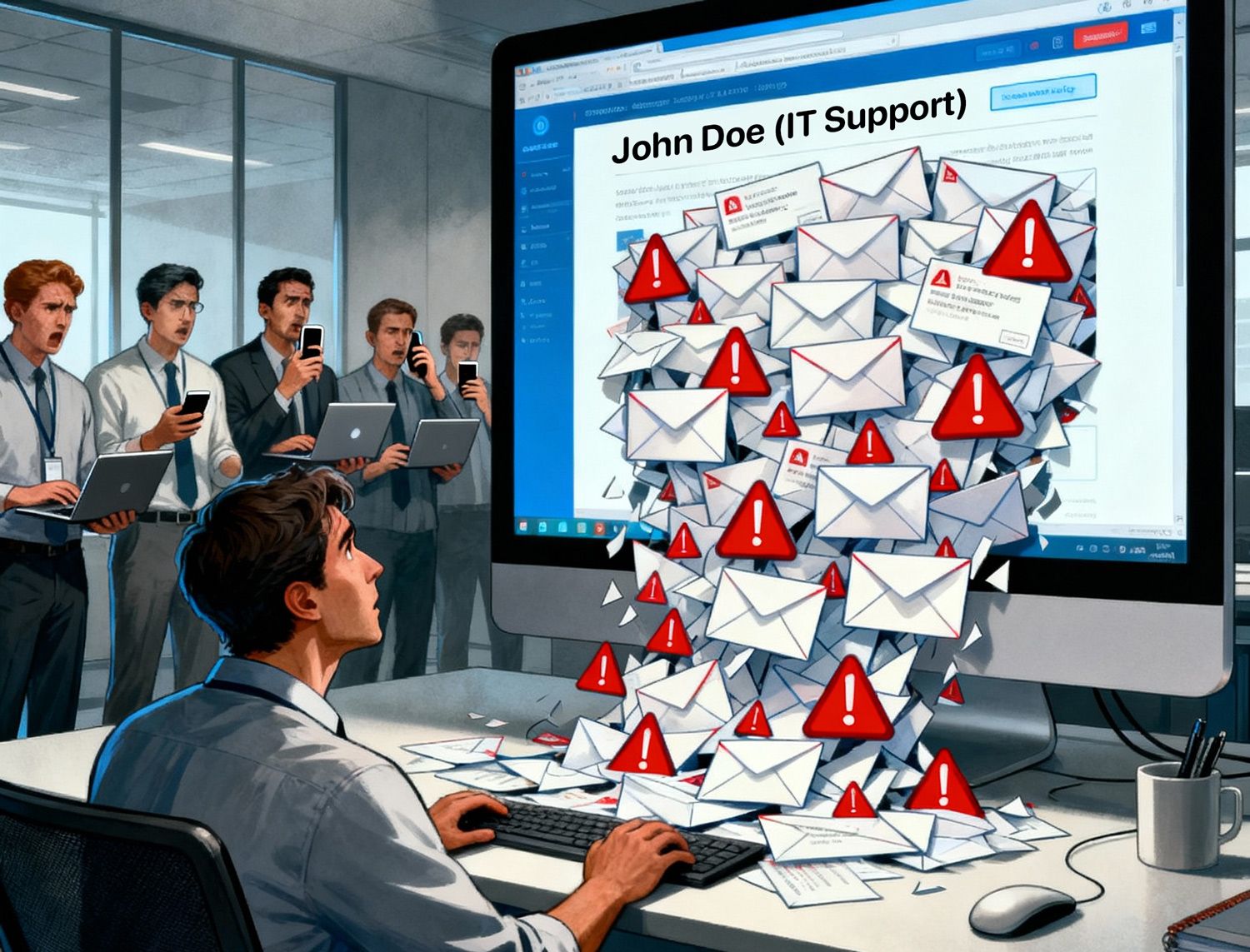
Every service desk has a version of this problem. A user submits a ticket that says "my laptop is broken." No model number, no error message, no urgency context. An agent picks it up, sends a follow-up question, waits a day for a response, then sends another. By the time the ticket contains enough information to act on, two days have passed and the SLA clock is already ticking hard.

This is not a user problem — it is a process design problem. Users submit what they know how to submit. If the intake form asks no questions, they provide no answers.

Unstructured ticket intake creates several downstream problems:

  • Agents spend a disproportionate share of their time gathering information rather than resolving issues
  • ticket categorization becomes inconsistent because different agents interpret vague descriptions differently
  • SLA targets are harder to meet when resolution cannot begin until a second or third exchange
  • Reporting and trend analysis become unreliable because ticket data is incomplete

Structured ticket templates solve this at the source. By asking the right questions at submission, you capture everything an agent needs to start work immediately.

What a Good Ticket Template Actually Contains

Blog image

A ticket template is not just a form with a subject line and a description box. A well-designed template is a structured intake workflow that collects the minimum necessary information for a specific request type — no more, no less.

The Core Fields Every Template Needs

Every template, regardless of request type, should include:

  • Request category and subcategory, pre-selected where possible
  • Affected user or asset, with a lookup rather than a free-text field
  • Priority or urgency indicator, guided by a short impact question rather than left to the user's judgment
  • A structured description section with specific prompts relevant to that request type
  • Any required attachments, such as error screenshots or approval documents

What Makes Templates Request-Specific

Generic templates reduce friction slightly. Request-specific templates eliminate it almost entirely. A hardware fault template should ask for the device type, serial number, and a description of the fault behaviour. A software access request template should ask for the application name, the level of access required, and the business justification. A new joiner request should capture the start date, department, line manager, and a checklist of required systems.

The goal is that when an agent opens the ticket, they can begin resolution without sending a single follow-up message.

How to Build Ticket Templates for Your Most Common Request Types

Blog image

Before you build anything, pull a report of your top 20 ticket categories from the last 90 days. These are your first templates. Anything outside that list can wait — building templates for rare request types before you have solved the high-volume ones is a common mistake.

Step-by-Step Template Build Process

  • Identify the top 10-20 ticket types by volume using your existing ticket data
  • For each type, list every piece of information an agent currently has to ask for after submission
  • Turn each of those items into a mandatory or conditional field in the template
  • Write short, plain-language field labels and helper text — users should not need to guess what you are asking
  • Add conditional logic where possible: for example, if the user selects "software" as the category, show the software-specific fields; if they select "hardware," show the hardware fields
  • Test each template with a sample of real users before rolling out — watch where they hesitate or skip fields
  • Iterate based on what agents report as still missing after the first two weeks of live use

Templates to Prioritise First

Most service desks will see the highest return from templates in these areas:

  • Hardware fault or replacement requests
  • Software installation and access requests
  • New employee onboarding requests (which often link to a broader IT onboarding and offboarding process)
  • Password reset and account unlock requests
  • VPN or remote access issues
  • General incident reports with guided impact and urgency fields

Integrating Templates With Your ITSM Platform

Blog image

A template is only as good as the system that delivers it. If your ITSM platform cannot enforce mandatory fields, apply conditional logic, or route tickets automatically based on template type, you will lose most of the efficiency gain at the point of submission.

When evaluating or configuring your platform, look for:

  • Dynamic form builders that support conditional field display
  • The ability to pre-populate fields based on the requester's profile, such as their department or assigned assets
  • Automatic routing rules that assign tickets to the right team based on the template selected
  • Integration with your asset database so users can select their device from a known inventory rather than typing it manually

TIKTING supports structured service request forms with conditional logic, automatic categorisation, and routing rules — so a template does not just capture better data, it also removes the manual triage step that follows submission. When paired with Odysseus, asset fields can be populated from live discovery data, eliminating the "I don't know my serial number" problem entirely.

Keeping Templates Maintained

Templates are not a one-time project. They require ongoing maintenance as services, systems, and processes change. Assign ownership of each template to the team or function it serves. Schedule a quarterly review to check whether the fields still reflect what agents need, and whether any new high-volume request types have emerged that need their own template.

Getting Users and Agents to Actually Use Them

Blog image

The most common reason ticket templates fail is not poor design — it is poor adoption. Users default to email or phone because the template feels like more work than firing off a quick message. Agents bypass templates because they were not involved in designing them.

Adoption requires deliberate effort on both sides.

For Users

  • Make the self-service portal the easiest path to submit a request — easier than email, easier than calling
  • Use clear, jargon-free language in template titles: "Report a broken device" rather than "Hardware incident submission"
  • Show users a confirmation message that sets expectations: "Your request has been received and will be assigned within two hours"
  • Link to relevant knowledge base articles at the point of submission so users can self-resolve before the ticket is even created — this supports a broader shift-left strategy that reduces overall ticket volume

For Agents

  • Involve agents in the template design process — they know what information they need better than anyone
  • Show agents the before-and-after: average exchanges per ticket before templates versus after
  • Make it easy for agents to flag when a template is missing a field, so improvements are captured continuously

Measuring Whether Your Templates Are Working

Blog image

You cannot improve what you do not measure. Once templates are live, track a small set of metrics to confirm they are delivering the expected benefit.

Key metrics to monitor:

  • Average number of exchanges per ticket before first action — this should fall after templates are introduced
  • Time to first response and time to resolution, segmented by request type — templates should reduce both
  • Percentage of tickets submitted via the structured portal versus email or phone — a rising portal percentage indicates adoption
  • Ticket reopen rate — better initial information tends to mean fewer misresolutions and fewer reopens
  • Agent-reported data quality score — a simple weekly or monthly survey asking agents to rate whether tickets are arriving with sufficient information

If any of these metrics are not moving in the right direction after four to six weeks, revisit the specific templates that correspond to the problem ticket types. The issue is almost always either a missing field or a field label that users are misinterpreting.

Frequently Asked Questions

What is a ticket template in ITSM?

A ticket template is a pre-structured intake form for a specific type of service request or incident. Instead of a blank text box, it presents users with relevant fields and prompts that capture the information agents need to begin resolution immediately, reducing back-and-forth exchanges and improving data quality across the ticket lifecycle.

How many ticket templates does a service desk need?

Most service desks benefit most from templates covering their top 10 to 20 request types by volume. Starting with fewer, well-designed templates is more effective than building dozens of templates that cover edge cases. Add new templates as new high-volume request types emerge, and retire templates for request types that are no longer common.

Who should own ticket template design and maintenance?

Template ownership works best when it is shared between the service desk manager, who understands the operational impact, and the team or function the template serves. The service desk manager ensures templates meet triage and routing requirements, while the owning team ensures the fields reflect what is actually needed to fulfil that request type.

How often should ticket templates be reviewed?

A quarterly review cycle is sufficient for most organisations. Reviews should check whether fields are still relevant, whether new request types need their own template, and whether any fields are consistently left blank by users — which usually means the field label is unclear or the field is unnecessary.

Can ticket templates reduce SLA breaches?

Yes, indirectly. SLA breaches often occur because resolution cannot begin until missing information is gathered through follow-up exchanges. Structured templates reduce the number of exchanges required before an agent can act, which compresses the time between submission and first meaningful action. This has a measurable positive effect on both first response and resolution times.

Do ticket templates work for incidents as well as service requests?

Templates are effective for both, though incident templates require a different design approach. A service request template is primarily about capturing fulfilment information. An incident template should focus on capturing impact, urgency, affected systems, and any error messages or recent changes — the information needed to diagnose and restore service quickly rather than to fulfil a standard request.

Key Takeaways

  • Unstructured ticket intake is a process design failure, not a user failure — templates fix it at the source
  • Build templates for your highest-volume request types first, using real ticket data to identify what fields are missing
  • Conditional logic and asset integration make templates significantly more effective than static forms
  • Adoption requires effort on both the user side and the agent side — involve agents in design and make the portal easier than email
  • Track exchanges per ticket, resolution time by request type, and portal adoption rate to confirm templates are working
  • Review templates quarterly and assign clear ownership so they stay current as services evolve

TIKTING provides the structured form builder, routing rules, and asset integration needed to make ticket templates work in practice. For teams managing physical assets, Odysseus ensures device data is always available at the point of submission. Visit itdevtech.com/support to see how the platform can be configured for your environment.

Further Reading

Related Articles

IT Service Desk Ticket Templates: Build Faster, Cleaner Intake in 2026

IT Service Desk Ticket Templates: Build Faster, Cleaner Intake in 2026

Vague tickets waste agent time. Learn how to design IT service desk ticket templates that capture the right information at intake and cut resolution time.

IT Service Desk Ticket Templates: Build Faster, Consistent Support in 2026

IT Service Desk Ticket Templates: Build Faster, Consistent Support in 2026

Incomplete tickets waste agent time before resolution even starts. Learn how to design a ticket template library that captures the right data upfront and speeds up every request.

IT Service Desk Ticket Templates: Build Faster, Consistent Intake in 2026

IT Service Desk Ticket Templates: Build Faster, Consistent Intake in 2026

Incomplete tickets waste agent time and inflate MTTR. Learn how to build a ticket template library that captures the right data at intake, every time.

IT Service Desk Ticket Templates: Build a Library That Saves Time in 2026

IT Service Desk Ticket Templates: Build a Library That Saves Time in 2026

Incomplete tickets slow every service desk down. Learn how to build a ticket template library that captures the right data, speeds resolution, and scales with your team in 2026.

IT Service Desk Ticket Templates: Build a Library That Saves Hours in 2026

IT Service Desk Ticket Templates: Build a Library That Saves Hours in 2026

Learn how to build an IT service desk ticket template library that cuts resolution time, reduces agent back-and-forth, and keeps your intake consistent in 2026.

IT Service Desk Ticket Workflow: Build One That Scales in 2026

IT Service Desk Ticket Workflow: Build One That Scales in 2026

A broken ticket workflow is why desks miss SLAs and lose context. Learn how to design, document, and automate one that scales in 2026.

IT Service Desk Ticket Workflow: Design a Flow That Resolves Faster in 2026

IT Service Desk Ticket Workflow: Design a Flow That Resolves Faster in 2026

A poorly designed ticket workflow stalls resolutions and frustrates users. Learn how to define states, automate routing and embed approvals that close tickets faster.

IT Service Desk Quality Assurance: Build a QA Process That Improves Every Ticket

IT Service Desk Quality Assurance: Build a QA Process That Improves Every Ticket

Learn how to build an IT service desk QA process that samples tickets, scores quality consistently, and turns coaching into real, measurable service improvement.

IT Service Desk Ticket Workflow: Build a Process That Scales in 2026

IT Service Desk Ticket Workflow: Build a Process That Scales in 2026

A broken ticket workflow is why SLAs slip and agents burn out. Learn the six stages of a scalable IT service desk ticket workflow and how to build one that holds up.

IT Service Desk Ticket Categorization: Build a System That Works in 2026

IT Service Desk Ticket Categorization: Build a System That Works in 2026

Poor ticket categorization corrupts your routing, SLAs, and reporting. Learn how to design, enforce, and maintain a scheme that works in 2026.

IT Service Desk Ticket Escalation Paths: Build Smarter Routes in 2026

IT Service Desk Ticket Escalation Paths: Build Smarter Routes in 2026

Poorly defined escalation paths cause SLA breaches and agent burnout. Learn how to map, document, and automate ticket escalation routes that actually work.

IT Service Desk Triage: Build a Process That Resolves Faster

IT Service Desk Triage: Build a Process That Resolves Faster

Learn how to build an IT service desk triage process that classifies, prioritises and routes every ticket correctly — so SLAs are met and nothing critical gets missed.

IT Ticket Prioritization: How to Triage Service Desk Requests Right

IT Ticket Prioritization: How to Triage Service Desk Requests Right

Ad hoc ticket triage causes SLA breaches and burned-out teams. Learn how to build an ITIL-aligned priority framework that scales with your service desk.

IT Service Desk Approval Workflows: Build a Process That Works in 2026

IT Service Desk Approval Workflows: Build a Process That Works in 2026

Still routing IT approvals through email? Learn how to build structured approval workflows that reduce delays, create audit trails, and scale with your organisation.

IT Service Desk Ticket Lifecycle: Manage Every Stage in 2026

IT Service Desk Ticket Lifecycle: Manage Every Stage in 2026

Learn how to manage every stage of the IT service desk ticket lifecycle — from intake to closure — with a practical checklist and process guide for 2026.

IT Service Desk Ticket Audit: How to Run One That Improves Quality in 2026

IT Service Desk Ticket Audit: How to Run One That Improves Quality in 2026

Learn how to run a service desk ticket audit that finds real quality gaps, with a step-by-step process, scoring rubric, and checklist for 2026.

IT Service Desk Ticket Reopen Rate: How to Reduce It in 2026

IT Service Desk Ticket Reopen Rate: How to Reduce It in 2026

Incident management restores service fast. Problem management stops it breaking again. Learn the key differences and how to run both practices without letting one undermine the oth

IT Service Desk Ticket Auditing: How to Stay Accountable in 2026

IT Service Desk Ticket Auditing: How to Stay Accountable in 2026

Learn how to build a repeatable IT service desk ticket auditing process that improves quality, supports compliance, and keeps your ITSM data trustworthy in 2026.

IT Service Desk Ticket Deflection: How to Reduce Volume in 2026

IT Service Desk Ticket Deflection: How to Reduce Volume in 2026

Learn how to build an IT service desk ticket deflection strategy in 2026 — covering self-service portals, knowledge bases, chatbots, and automation.

IT Service Desk Ticket Ownership: How to Fix Accountability Gaps in 2026

IT Service Desk Ticket Ownership: How to Fix Accountability Gaps in 2026

Ticket ownership gaps cause SLA breaches and silent queues. Learn how to define accountability, enforce handovers, and build a process that keeps every ticket moving.

IT Service Desk Training Plan: Build Skills That Stick in 2026

IT Service Desk Training Plan: Build Skills That Stick in 2026

A structured IT service desk training plan builds skills that stick. Learn how to design, deliver, and measure training that improves FCR, reduces escalations, and keeps SLAs on tr

IT Service Desk Continuous Improvement: Build a Cycle That Sticks in 2026

IT Service Desk Continuous Improvement: Build a Cycle That Sticks in 2026

IT service desk continuous improvement stalls without a feedback loop. Learn a practical four-stage cycle to measure, act, and close the loop in 2026.

IT Service Desk Ticket Reassignment: How to Reduce It in 2026

IT Service Desk Ticket Reassignment: How to Reduce It in 2026

High ticket reassignment rates slow resolution and frustrate users. Learn the root causes, how to measure them, and a practical process to reduce reassignment in 2026.

IT Service Desk Ticket Reopen Rate: How to Reduce It in 2026

IT Service Desk Ticket Reopen Rate: How to Reduce It in 2026

A high ticket reopen rate signals broken resolutions. Learn what drives reopens, how to measure them correctly, and the step-by-step process to reduce them in 2026.

IT Service Desk Ticket Closure: How to Close Tickets Right in 2026

IT Service Desk Ticket Closure: How to Close Tickets Right in 2026

A poor ticket closure process drives reopen rates up and CSAT down. Learn the steps, checklist, and metrics to close tickets right in 2026.

IT Service Desk On-Call Management: Build a Process That Works in 2026

IT Service Desk On-Call Management: Build a Process That Works in 2026

Ad-hoc on-call coverage breaks under pressure. Learn how to design a structured IT service desk on-call process that keeps services covered in 2026.

IT Service Desk Ticket Aging: How to Stop Stale Tickets in 2026

IT Service Desk Ticket Aging: How to Stop Stale Tickets in 2026

Aged tickets quietly destroy SLA compliance and user trust. Learn how to measure ticket aging, find the root causes, and build a process that keeps every ticket moving.

IT Service Desk Workflow Automation: Build Smarter Flows in 2026

IT Service Desk Workflow Automation: Build Smarter Flows in 2026

Learn which IT service desk workflows to automate first in 2026, how to design them step by step, and how to measure real impact without common pitfalls.

IT Service Desk Ticket Volume: How to Reduce It in 2026

IT Service Desk Ticket Volume: How to Reduce It in 2026

IT service desk ticket volume keeps climbing for most teams. Here's how to measure what's driving it and reduce it with self-service, automation, and problem management.

IT Service Desk Ticket Routing: How to Get Every Ticket to the Right Team Fast

IT Service Desk Ticket Routing: How to Get Every Ticket to the Right Team Fast

Ticket routing failures cause SLA breaches and wasted triage time. Learn how to build a routing model that gets every ticket to the right team automatically.

ITSM for IT Service Desk Managers: Build a Resilient Team in 2026

ITSM for IT Service Desk Managers: Build a Resilient Team in 2026

Understaffed shifts and skill silos kill SLA performance. Learn how to apply ITSM workforce management to build a resilient, well-balanced service desk team in 2026.

ITSM for IT Service Desk Teams: Build a High-Performing Desk in 2026

ITSM for IT Service Desk Teams: Build a High-Performing Desk in 2026

Struggling with ticket chaos and SLA breaches? Learn how to structure, measure, and continuously improve your IT service desk in 2026 with practical ITIL v4 guidance.

IT Service Desk Reporting: Build Reports That Drive Real Improvement

IT Service Desk Reporting: Build Reports That Drive Real Improvement

Most service desk reports produce numbers, not decisions. Learn how to build IT service desk reports that drive real improvement across every audience level.

IT Service Desk Ticket Backlog: How to Clear It and Keep It Clear

IT Service Desk Ticket Backlog: How to Clear It and Keep It Clear

A growing ticket backlog signals a broken support process. Learn how to audit, clear, and prevent your IT service desk backlog with practical steps.

IT Service Desk Knowledge Management Gaps: How to Fix Them in 2026

IT Service Desk Knowledge Management Gaps: How to Fix Them in 2026

Knowledge gaps silently drain service desk performance. Learn how to audit, close, and prevent them with a practical process built for 2026.

IT Service Desk Knowledge Management Audit: A Practical 2026 Guide

IT Service Desk Knowledge Management Audit: A Practical 2026 Guide

Learn how to audit your service desk knowledge base in 2026 — cover gaps, fix stale articles, assign owners, and build a review cycle that keeps it accurate.

IT Service Desk Root Cause Analysis: A Practical Guide for 2026

IT Service Desk Root Cause Analysis: A Practical Guide for 2026

Learn how to build a repeatable IT service desk root cause analysis process in 2026 — stop recurring incidents, reduce ticket volume, and drive real improvement.

IT Service Desk Performance Review: How to Run One That Drives Real Change in 2026

IT Service Desk Performance Review: How to Run One That Drives Real Change in 2026

Learn how to run an IT service desk performance review that drives real change — with the right metrics, a structured agenda, and actions that actually get completed.

IT Service Desk Handover Process: How to Keep Support Running 24/7

IT Service Desk Handover Process: How to Keep Support Running 24/7

A broken shift handover causes SLA breaches and lost context. Learn how to build a repeatable IT service desk handover process that keeps support running 24/7.

IT Service Desk Agent Burnout: How to Spot and Fix It in 2026

IT Service Desk Agent Burnout: How to Spot and Fix It in 2026

IT service desk agent burnout drains your best people before you notice. Learn the measurable warning signs, root causes, and a practical 2026 action plan to fix it.

IT Service Desk Customer Satisfaction: How to Measure and Improve CSAT in 2026

IT Service Desk Customer Satisfaction: How to Measure and Improve CSAT in 2026

Learn how to measure IT service desk CSAT properly, interpret the scores, and take practical steps to improve user satisfaction in 2026 without adding headcount.

IT Service Desk Benchmarking: How to Measure Up in 2026

IT Service Desk Benchmarking: How to Measure Up in 2026

Learn how to run an IT service desk benchmarking exercise in 2026 — which metrics matter, how to source peer data, and how to turn results into a real improvement roadmap.

IT Service Desk SLA Breach: How to Prevent and Recover Fast in 2026

IT Service Desk SLA Breach: How to Prevent and Recover Fast in 2026

SLA breaches damage user trust fast. Learn why they happen, how to prevent them with the right process design, and how to recover cleanly when they do occur.

IT Service Desk Cost Reduction: How to Cut Costs Without Cutting Quality in 2026

IT Service Desk Cost Reduction: How to Cut Costs Without Cutting Quality in 2026

IT service desk cost reduction in 2026: where costs come from, which levers cut spend without hurting quality, and a practical checklist to get started.

IT Service Desk Omnichannel Support: How to Unify Every Channel in 2026

IT Service Desk Omnichannel Support: How to Unify Every Channel in 2026

Fragmented channels inflate backlogs and slow resolution. Learn how to unify email, chat, phone and portal into one omnichannel IT service desk queue in 2026.

IT Service Desk Chat Support: How to Do It Right in 2026

IT Service Desk Chat Support: How to Do It Right in 2026

Chat support on your service desk only works when it is wired into your ticketing workflow. Here is how to design, launch, and measure it right in 2026.

IT Service Desk Knowledge Base Metrics: What to Measure in 2026

IT Service Desk Knowledge Base Metrics: What to Measure in 2026

Measuring your knowledge base is the only way to know if it's deflecting tickets. Learn the metrics that matter and how to act on them in 2026.

IT Service Desk Staffing: How to Right-Size Your Team in 2026

IT Service Desk Staffing: How to Right-Size Your Team in 2026

Right-sizing your IT service desk team is harder than it looks. Learn how to calculate headcount, spot staffing problems early, and build a model that scales.

ITSM for IT Service Continuity: Build a Resilient Recovery Plan in 2026

ITSM for IT Service Continuity: Build a Resilient Recovery Plan in 2026

IT service continuity planning fails when it's untested and out of date. Learn how to use ITSM practices to build a recovery plan that actually works in 2026.

IT Onboarding and Offboarding: A Service Desk Process Guide

IT Onboarding and Offboarding: A Service Desk Process Guide

Ad hoc onboarding and offboarding leaves accounts open and assets untracked. Learn how to build a repeatable, ITIL-aligned process that closes both gaps.

IT Service Catalog: How to Build One That Actually Gets Used

IT Service Catalog: How to Build One That Actually Gets Used

Learn how to build an IT service catalog users actually adopt — with the right structure, intake forms, fulfillment workflows, SLA targets, and a quarterly review process.

IT Release Management: A Practical Guide for Service Desk Teams

IT Release Management: A Practical Guide for Service Desk Teams

A poorly managed release floods your service desk with incidents. This practical guide covers the full release management process, common mistakes, and a step-by-step checklist.

IT First Contact Resolution: How to Improve FCR on Your Service Desk

IT First Contact Resolution: How to Improve FCR on Your Service Desk

Low first contact resolution drains your service desk. Learn what causes FCR to drop and the step-by-step process to improve it across your team.

IT Service Desk Shift-Left Strategy: Reduce Escalations and Costs

IT Service Desk Shift-Left Strategy: Reduce Escalations and Costs

Learn how to build a practical shift-left strategy that reduces escalations, improves first-contact resolution, and cuts service desk costs — step by step.

ITSM for IT Service Portfolio Management: Govern Services in 2026

ITSM for IT Service Portfolio Management: Govern Services in 2026

IT service portfolio management governs every service IT delivers — pipeline, live, and retired. Learn how to build, measure, and sustain the process in 2026.

ITSM for Executive Leadership: Build a Business Case in 2026

ITSM for Executive Leadership: Build a Business Case in 2026

Learn how to build an ITSM business case that wins executive approval — with financial, risk, and compliance arguments that speak the language of CIOs and CFOs.

ITSM for IT Security Operations: Align SecOps and Service Management in 2026

ITSM for IT Security Operations: Align SecOps and Service Management in 2026

Learn how to connect SecOps alerts to ITSM workflows — incident management, change enablement, and CMDB data — to close compliance gaps and speed up response.

ITSM for IT Operations Teams: Manage Infrastructure Requests and Incidents in 2026

ITSM for IT Operations Teams: Manage Infrastructure Requests and Incidents in 2026

IT operations teams juggling incidents, changes, and asset sprawl need ITSM structure. Learn how to apply ITIL practices, build a service catalog, and keep your CMDB accurate in 20

ITSM for Project Management Offices: Govern Requests and Delivery in 2026

ITSM for Project Management Offices: Govern Requests and Delivery in 2026

PMOs still running on email and spreadsheets pay in missed deadlines and audit gaps. Learn how ITSM principles transform PMO intake, change control, and governance.

ITSM for Procurement Teams: Manage Requests and Approvals in 2026

ITSM for Procurement Teams: Manage Requests and Approvals in 2026

Procurement still runs on email and spreadsheets in most organisations. Learn how ITSM principles turn purchase requests, approvals and vendor workflows into a measurable, auditabl

ITSM for Administration Teams: Streamline Requests and Approvals in 2026

ITSM for Administration Teams: Streamline Requests and Approvals in 2026

Administration teams drown in email requests and stalled approvals. Learn how ITSM principles can bring structure, SLAs, and visibility to every admin service in 2026.

ITSM for Internal Audit Teams: Manage Requests and Findings in 2026

ITSM for Internal Audit Teams: Manage Requests and Findings in 2026

Internal audit teams still run findings in spreadsheets and email. Learn how applying ITSM principles fixes request intake, finding tracking, and compliance reporting.

ITSM for Training Teams: Manage Requests and Programs in 2026

ITSM for Training Teams: Manage Requests and Programs in 2026

Learn how to apply ESM principles to corporate training teams — structured intake, service catalogs, SLA tracking and compliance reporting without the email chaos.

ITSM for Warehouse and Logistics Teams: Manage Requests and Operations in 2026

ITSM for Warehouse and Logistics Teams: Manage Requests and Operations in 2026

Learn how to apply ITSM and ESM principles to warehouse and logistics teams — structured request management, asset tracking, and SLAs that replace email chaos.

ITSM for Engineering Teams: Manage Requests and Projects in 2026

ITSM for Engineering Teams: Manage Requests and Projects in 2026

Engineering teams drown in scattered requests. Learn how to apply ITSM principles to bring structure, SLAs, and visibility to engineering service delivery in 2026.

ITSM for QA Teams: Manage Test Requests and Defects in 2026

ITSM for QA Teams: Manage Test Requests and Defects in 2026

QA teams manage structured work every day — but without ITSM, requests get lost and defects go untracked. Here's how to fix that in 2026.

ITSM for Supply Chain Teams: Manage Requests and Approvals in 2026

ITSM for Supply Chain Teams: Manage Requests and Approvals in 2026

Learn how supply chain teams can apply ITSM principles to manage procurement requests, approvals, and logistics queries with SLAs and full audit trails.

ITSM for Marketing Teams: Manage Requests and Campaigns in 2026

ITSM for Marketing Teams: Manage Requests and Campaigns in 2026

Marketing teams drown in ad-hoc requests. Learn how ITSM principles — service catalog, SLAs, and a request portal — bring order to marketing operations in 2026.

ITSM for Sales Teams: Manage Requests and Approvals in 2026

ITSM for Sales Teams: Manage Requests and Approvals in 2026

Sales teams lose hours chasing approvals and IT requests. Learn how to apply ESM to sales service delivery, build a service catalogue, and automate deal desk approvals.

ITSM for Manufacturing Teams: Manage Requests and Downtime in 2026

ITSM for Manufacturing Teams: Manage Requests and Downtime in 2026

Discover how ITSM principles reduce unplanned downtime and bring order to manufacturing request management — from equipment faults to planned maintenance.

CMDB Best Practices: How to Build and Maintain a Clean CMDB

CMDB Best Practices: How to Build and Maintain a Clean CMDB

A stale CMDB costs your team time and trust. Learn how to scope, build, and maintain a clean CMDB with practical steps and a maintenance checklist.

IT Knowledge Management: Build a Self-Service KB That Reduces Tickets

IT Knowledge Management: Build a Self-Service KB That Reduces Tickets

A dusty wiki nobody reads won't reduce your ticket queue. Learn how to build and maintain a self-service knowledge base that actually deflects tickets.

IT Escalation Management: How to Build a Process That Works

IT Escalation Management: How to Build a Process That Works

A weak escalation process is behind most missed SLAs and burned-out teams. Learn how to design clear tiers, triggers, and workflows that actually hold up.

IT Configuration Management: Build a CMDB That Drives Real Value

IT Configuration Management: Build a CMDB That Drives Real Value

Most CMDBs fail within months of launch. Learn how to design, populate, and maintain a configuration management practice that teams actually trust and use.

IT Continual Improvement: How to Build a Process That Sticks

IT Continual Improvement: How to Build a Process That Sticks

Continual improvement is central to ITIL v4 but rarely done well. Learn how to build a register, prioritise work, and embed improvement into everyday ITSM.

ITSM for HR Teams: How to Run HR Service Delivery Like IT

ITSM for HR Teams: How to Run HR Service Delivery Like IT

HR teams drown in email requests with no SLAs, no tracking, and no self-service. Learn how ITSM principles transform HR service delivery step by step.

ITSM for IT Change Failure: How to Reduce Failed Changes in 2026

ITSM for IT Change Failure: How to Reduce Failed Changes in 2026

High change failure rate costs you time, trust, and SLA compliance. Learn the root causes, ITIL v4 controls, and a practical checklist to reduce failed changes in 2026.

ITSM for MSPs: Manage Multiple Clients Without the Chaos in 2026

ITSM for MSPs: Manage Multiple Clients Without the Chaos in 2026

MSPs face unique ITSM challenges: multi-client SLAs, isolated CMDBs, and constant context-switching. This guide covers how to run a scalable, structured MSP service operation.

ITSM for IT Procurement: Cut Lead Times and Control Costs in 2026

ITSM for IT Procurement: Cut Lead Times and Control Costs in 2026

Learn how to apply ITSM discipline to IT procurement — structured intake, approval workflows, SLAs, and asset registration — to cut lead times and stay audit-ready.

ITSM for IT Asset Disposal: Stay Compliant and Secure in 2026

ITSM for IT Asset Disposal: Stay Compliant and Secure in 2026

IT asset disposal carries real compliance and security risk. Learn how to build an ITSM-driven disposal process that protects data and keeps your CMDB clean.

ITSM for IT Compliance and Governance: Stay Audit-Ready in 2026

ITSM for IT Compliance and Governance: Stay Audit-Ready in 2026

Learn how a structured ITSM approach closes the compliance gaps auditors find most often — from undocumented changes to untracked assets — and how to stay audit-ready in 2026.

ITSM for DevOps Teams: Bridge the Gap Between Dev and Ops in 2026

ITSM for DevOps Teams: Bridge the Gap Between Dev and Ops in 2026

ITSM and DevOps don't have to conflict. Learn how to align change management, incident workflows, and CMDB practices so your teams can ship fast and stay stable.

ITSM for Security Teams: Manage Incidents and Stay Compliant in 2026

ITSM for Security Teams: Manage Incidents and Stay Compliant in 2026

Learn how to apply ITSM practices to security operations — structured incident triage, vulnerability tracking, access request workflows, and audit-ready compliance evidence.

ITSM for Risk Management Teams: Track Issues and Stay Compliant in 2026

ITSM for Risk Management Teams: Track Issues and Stay Compliant in 2026

Risk teams still run on spreadsheets. Learn how applying ITSM to risk management brings structured workflows, SLA accountability, and audit-ready evidence.

IT Incident Management Best Practices: A Complete Guide

IT Incident Management Best Practices: A Complete Guide

Cut downtime and missed SLAs with these proven IT incident management best practices — from triage and escalation to SLA tracking and post-incident review.

Showcases TIKTING at ITCN Asia 2026 in Lahore

Showcases TIKTING at ITCN Asia 2026 in Lahore

ITDEVTECH showcased its flagship solution TIKTING at ITCN Asia 2026 in Lahore, demonstrating how it streamlines IT operations and empowers organizations.

Why Email-Based IT Support Fails in Large Organizations

Why Email-Based IT Support Fails in Large Organizations

Email-based IT support fails in large organizations due to lost requests, no accountability, poor visibility, and compliance risks. Learn why.

SLA Management in ITSM: How to Set, Track, and Meet Targets

SLA Management in ITSM: How to Set, Track, and Meet Targets

Missing SLA targets? Learn how to set realistic service level agreements, track compliance in real time, and fix the root causes of breaches in your ITSM environment.

IT License Compliance: How to Audit and Stay Audit-Ready

IT License Compliance: How to Audit and Stay Audit-Ready

A failed software audit can mean penalties and emergency spend. Learn how to build an IT license compliance programme that keeps you audit-ready year-round.

IT Change Advisory Board: How to Run a CAB That Works

IT Change Advisory Board: How to Run a CAB That Works

A change advisory board only adds value if it's run well. Learn who should attend, how to structure meetings, and which metrics keep your CAB improving.

IT Availability Management: How to Keep Services Up and SLAs Met

IT Availability Management: How to Keep Services Up and SLAs Met

Learn how to define availability targets, measure uptime accurately, and build a repeatable process that keeps services running and SLAs met.

IT Asset Audit: How to Run One That Actually Finds the Gaps

IT Asset Audit: How to Run One That Actually Finds the Gaps

Learn how to plan and run an IT asset audit that finds real gaps — with a step-by-step process, common failure points, and tips for turning findings into lasting improvements.

IT Capacity Management: How to Plan Before Problems Hit

IT Capacity Management: How to Plan Before Problems Hit

Reactive capacity management causes incidents, SLA breaches, and budget surprises. Learn how to build a proactive process that keeps services ahead of demand.

IT Vendor Management: How to Govern Suppliers and Cut Risk

IT Vendor Management: How to Govern Suppliers and Cut Risk

Ungoverned suppliers cause outages and missed SLAs. Learn how to build a vendor management process that tracks contracts, measures performance, and integrates with ITSM.

IT Event Management: How to Cut Noise and Catch What Matters

IT Event Management: How to Cut Noise and Catch What Matters

IT event management turns monitoring noise into actionable signals. Learn how to categorise events, beat alert fatigue, and build a process that catches issues before users do.

IT Asset Depreciation: How to Track and Plan for End-of-Life Assets

IT Asset Depreciation: How to Track and Plan for End-of-Life Assets

Learn how to track IT asset depreciation, plan hardware end-of-life cycles, and connect retirement workflows to your ITSM process before budget surprises hit.

IT Demand Management: How to Plan for IT Work Before It Overwhelms Your Team

IT Demand Management: How to Plan for IT Work Before It Overwhelms Your Team

IT demand management makes all incoming work visible before it overwhelms your team. Learn how to build a practical intake, prioritisation, and planning process.

IT Mean Time to Resolve: How to Measure and Improve MTTR

IT Mean Time to Resolve: How to Measure and Improve MTTR

MTTR is a critical service desk metric — but most teams measure it wrong. Learn how to calculate, segment, and systematically reduce mean time to resolve.

IT Asset Tracking: How to Know Where Every Asset Is at All Times

IT Asset Tracking: How to Know Where Every Asset Is at All Times

Most IT teams think their asset tracking is reliable — until an audit proves otherwise. Learn how to build a process that stays accurate without manual effort.