ITSM for IT Security Operations: Align SecOps and Service Management in 2026

August 1, 2026
7 min read

Learn how to connect SecOps alerts to ITSM workflows — incident management, change enablement, and CMDB data — to close compliance gaps and speed up response.

IT security operations and ITSM workflows are often treated as separate disciplines, yet every vulnerability finding, access request, and security incident eventually lands on a service desk queue or a change advisory board agenda. Closing that gap — connecting SecOps alerts to structured ITSM processes — is one of the highest-leverage improvements an IT organisation can make in 2026. This guide explains why the divide exists, what it costs you, and how to build a joined-up model that makes both teams faster and more accountable.

Why SecOps and ITSM Still Operate in Silos

Security operations teams and IT service management teams grew up in different parts of the organisation. SecOps inherited tools like SIEMs, vulnerability scanners and threat-intelligence platforms. ITSM teams inherited ticketing systems, SLA dashboards and change calendars. Neither side was designed with the other in mind, and the gap shows up in predictable ways.

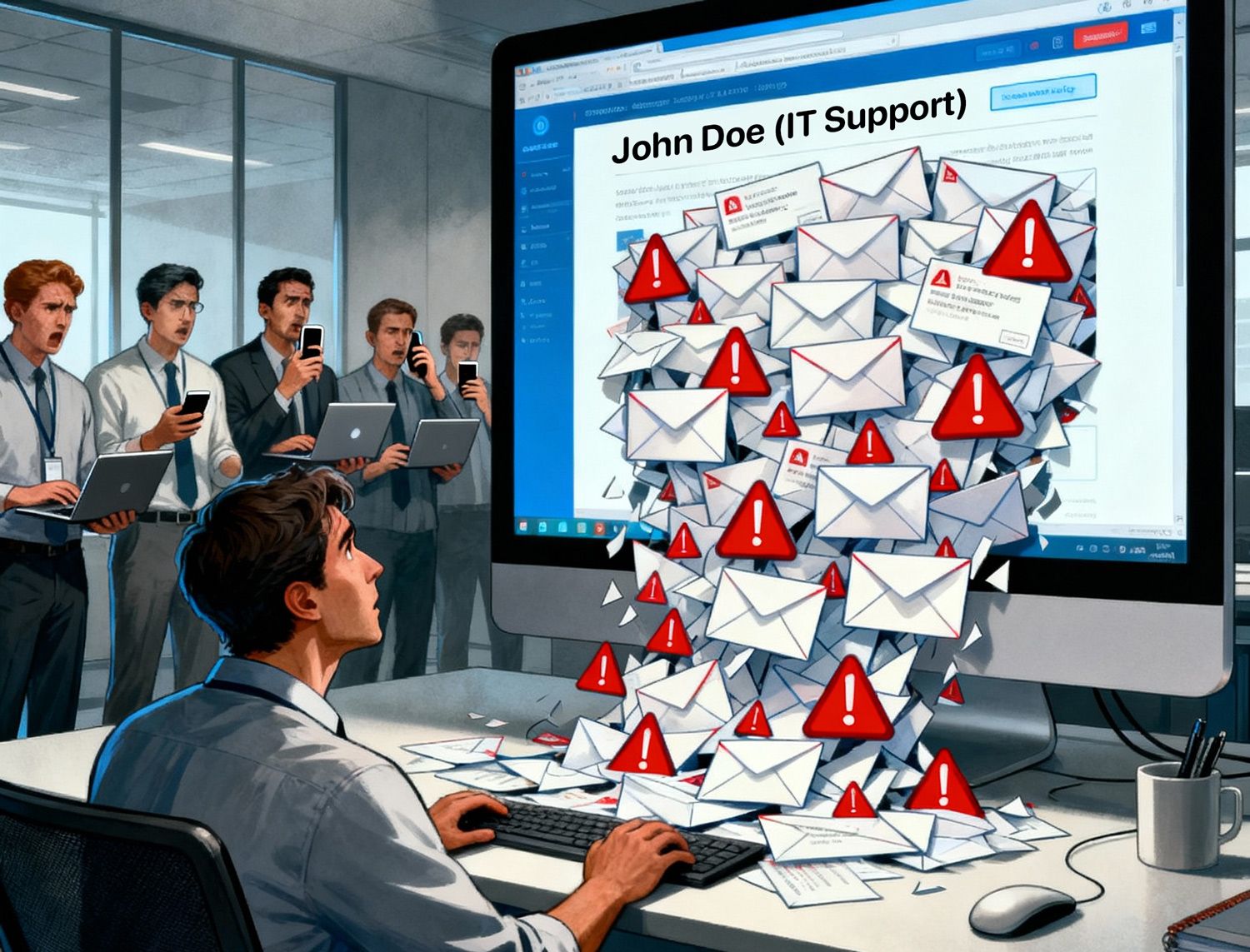
  • Security alerts are raised in a SIEM but never converted into formal incidents, so there is no SLA, no owner and no audit trail.
  • Vulnerability remediation requires patching or configuration changes, but change management is bypassed because SecOps teams see it as bureaucratic overhead.
  • Access provisioning requests arrive through email or Slack rather than a structured service request workflow, making them invisible to auditors.
  • Post-incident reviews happen inside the security team without feeding into the ITSM problem management process, so root causes are never formally closed.

The result is a compliance gap. When an auditor asks for evidence that a critical vulnerability was remediated within your agreed SLA, you cannot produce a ticket. When a regulator asks who approved a firewall change, the answer is a Slack thread. These are avoidable problems.

The ITIL v4 Practices That Anchor SecOps Integration

Blog image

ITIL v4 does not have a dedicated "security management" practice, but it defines several practices that map directly onto SecOps workflows. Understanding those mappings is the first step to building a joined-up model.

Incident Management

Every security event that crosses a defined threshold — a confirmed breach, a ransomware trigger, an account compromise — should be logged as a formal IT incident. That means it gets a priority, an SLA clock, an assigned resolver group, and a formal closure record. The TIKTING service management platform supports dedicated resolver groups for security incidents, so tickets are routed to SecOps automatically without passing through a general queue.

Change Enablement

Patching a critical CVE, updating firewall rules, or rotating certificates are all changes. They should go through change enablement, but not necessarily through a full CAB review. Most organisations classify security-driven patches as standard or pre-approved changes with an expedited path, reserving CAB review for changes that touch production architecture. Documenting that classification in your change model removes the friction SecOps teams complain about.

Service Request Management

Access requests — new user provisioning, privilege elevation, VPN access, MFA enrolment — are service requests, not incidents. Running them through a formal service request workflow gives you an approval record, a fulfilment SLA and an audit trail. This is the single easiest win for organisations trying to improve access governance without buying a dedicated identity management platform.

Problem Management

When a security incident recurs — the same phishing vector, the same misconfigured service — it should trigger a problem record. Problem management drives root-cause investigation and permanent fixes. Without it, SecOps teams patch the same symptom repeatedly while the underlying vulnerability stays open.

Building a Joined-Up SecOps and ITSM Workflow

Blog image

A practical integration does not require replacing either your SIEM or your ITSM platform. It requires agreed handoff points and a shared understanding of who owns what at each stage.

Step 1 — Define your security incident categories

Create a set of incident categories in your ITSM platform that map to your SecOps taxonomy. Common categories include: malware detection, unauthorised access, data exposure, denial of service, phishing, and policy violation. Each category should have a default priority and a default resolver group pre-assigned.

Step 2 — Set SLAs for security incidents

Security incidents need their own SLA targets, separate from general IT incidents. Most organisations use a tiered model:

  • Critical (active breach, data exfiltration) — initial response within 15 minutes, containment within two hours.
  • High (confirmed compromise, no active exfiltration) — response within one hour, resolution within 24 hours.
  • Medium (suspicious activity, unconfirmed) — response within four hours, investigation within 48 hours.
  • Low (policy violation, low-risk finding) — response within one business day.

These targets should be documented in your service level management configuration so breach notifications fire automatically.

Step 3 — Create a standard change model for security patches

Work with your change manager to define a pre-approved change model for routine security patching. The model should specify: approved patch sources, permitted maintenance windows, rollback requirements, and the CI types the change can touch. SecOps engineers can then execute within that model without raising a full RFC, while the change record is still created automatically for audit purposes.

Step 4 — Route SIEM alerts into ITSM via integration

Most modern SIEMs support webhook or API output. Configure your SIEM to push alerts above a defined severity threshold directly into your ITSM platform as draft incidents. A human reviewer in SecOps confirms and activates the ticket. This keeps the alert-to-ticket conversion time under five minutes while preventing noise from flooding the queue.

Step 5 — Close the loop with problem management

After any security incident rated High or above is resolved, open a problem record linked to the incident. Assign it to a named owner with a target resolution date. Track it in your weekly or fortnightly problem review. When the root cause is permanently fixed, close the problem record with documented evidence. This record becomes your audit trail for regulators and insurers.

Asset Context Is the Missing Layer

Blog image

One reason security incidents take longer to resolve than they should is that responders lack immediate context about the affected asset. Which team owns this server? What other services depend on it? Is it in scope for PCI DSS? Is it running an end-of-life OS?

That context lives in your CMDB. When your CMDB is accurate and linked to your incident records, responders can answer those questions in seconds rather than minutes. Odysseus, the endpoint asset-discovery solution from ITDEVTECH, continuously scans your network and syncs discovered assets — including installed software, OS version, open ports and hardware details — into the TIKTING CMDB. When a security incident is raised against a device, the resolver sees its full configuration record immediately.

This matters most during major incidents. Knowing that a compromised endpoint is running an unsupported OS, is connected to three critical business services, and was last patched eight months ago changes your containment decision in the first five minutes. Without that data, responders make decisions on incomplete information.

Metrics That Tell You Whether the Integration Is Working

Blog image

Joining SecOps and ITSM processes only creates value if you measure the outcomes. The metrics below give you a clear picture of whether the integration is improving security posture and operational efficiency.

  • Mean time to detect (MTTD) — the average time between a security event occurring and a ticket being raised. Reducing this below 30 minutes for high-severity events is a realistic target for most organisations.
  • Mean time to contain (MTTC) — the time from ticket creation to containment action being completed. Track this per incident category to find where delays concentrate.
  • Patch SLA compliance rate — the percentage of critical and high-severity vulnerability findings remediated within your agreed SLA window. This is the number auditors ask for first.
  • Security change failure rate — the percentage of security-driven changes that result in an unplanned incident. A high rate suggests your pre-approved change model is too permissive or your testing steps are insufficient.
  • Access request fulfilment time — the average time from a service request being raised to access being granted. Anything above two business days for standard access is worth investigating.

Review these metrics monthly in a joint SecOps and service desk operations meeting. Bring the data from your ITDEVTECH blog resources and your ITSM reporting dashboards into the same conversation.

Frequently Asked Questions

What is the difference between a security incident and an IT incident?

An IT incident is any unplanned interruption to a service or reduction in service quality. A security incident is a specific type of IT incident caused by a threat to confidentiality, integrity or availability — such as a breach, malware infection or unauthorised access. All security incidents are IT incidents and should be managed through the same incident management process, with a dedicated category and resolver group.

Who owns a security incident — SecOps or the service desk?

Ownership is typically split. The service desk owns the ticket lifecycle — logging, SLA tracking, communication and closure. The SecOps team owns the technical investigation and containment. A clear RACI documented in your incident management process prevents the handoff from becoming a gap where accountability is lost.

Most organisations review their standard and pre-approved change models at least annually, and after any change-related security incident. If your threat landscape or regulatory requirements shift significantly — for example, a new compliance standard is adopted — an out-of-cycle review is warranted.

Do I need a separate ITSM platform for security operations?

No. The most effective approach is to extend your existing ITSM platform with security-specific categories, SLAs, resolver groups and change models rather than running a parallel system. A separate platform creates the same silo problem you are trying to solve, with the added cost of two toolsets and two sets of data to maintain.

How does CMDB data improve security incident response?

An accurate CMDB gives responders immediate context about an affected asset — its owner, dependencies, compliance scope, software inventory and patch status. This reduces investigation time, improves containment decisions and provides the evidence trail auditors require after a security event.

What ITIL v4 practice covers information security management?

ITIL v4 includes an Information Security Management practice that covers policies, controls and risk treatment across the service lifecycle. It works alongside incident management, change enablement and problem management to provide a complete security governance framework. Guidance is available from AXELOS, the body that maintains the ITIL framework.

Key Takeaways

  • The gap between SecOps and ITSM creates compliance risk, slower response times and missing audit trails.
  • Map your security workflows to ITIL v4 practices: incidents, change enablement, service requests and problem management.
  • Define security-specific incident categories, SLA tiers and pre-approved change models to remove friction without bypassing governance.
  • Integrate your SIEM with your ITSM platform so alerts become tickets automatically, with human confirmation before activation.
  • Accurate CMDB data — kept current by automated asset discovery — cuts investigation time and improves containment decisions.
  • Measure MTTD, MTTC, patch SLA compliance and change failure rate monthly to verify the integration is delivering value.

TIKTING supports all of these workflows natively — security incident categories, SLA policies, change models and CMDB linkage — while Odysseus keeps your asset data current without manual effort. Explore both at itdevtech.com.

Further reading

Related Articles

IT Service Continuity Management: A Practical ITSM Guide

IT Service Continuity Management: A Practical ITSM Guide

Learn how to build a practical IT service continuity management programme: BIA, recovery strategies, testing, and how ITSCM connects to your wider ITSM practices.

ITSM for IT Operations Teams: Manage Infrastructure Requests and Incidents in 2026

ITSM for IT Operations Teams: Manage Infrastructure Requests and Incidents in 2026

IT operations teams juggling incidents, changes, and asset sprawl need ITSM structure. Learn how to apply ITIL practices, build a service catalog, and keep your CMDB accurate in 20

ITSM for Project Management Offices: Govern Requests and Delivery in 2026

ITSM for Project Management Offices: Govern Requests and Delivery in 2026

PMOs still running on email and spreadsheets pay in missed deadlines and audit gaps. Learn how ITSM principles transform PMO intake, change control, and governance.

ITSM for Security Teams: Manage Incidents and Stay Compliant in 2026

ITSM for Security Teams: Manage Incidents and Stay Compliant in 2026

Learn how to apply ITSM practices to security operations — structured incident triage, vulnerability tracking, access request workflows, and audit-ready compliance evidence.

ITSM for Risk Management Teams: Track Issues and Stay Compliant in 2026

ITSM for Risk Management Teams: Track Issues and Stay Compliant in 2026

Risk teams still run on spreadsheets. Learn how applying ITSM to risk management brings structured workflows, SLA accountability, and audit-ready evidence.

ITSM for Warehouse and Logistics Teams: Manage Requests and Operations in 2026

ITSM for Warehouse and Logistics Teams: Manage Requests and Operations in 2026

Learn how to apply ITSM and ESM principles to warehouse and logistics teams — structured request management, asset tracking, and SLAs that replace email chaos.

SLA Management in ITSM: How to Set, Track, and Meet Targets

SLA Management in ITSM: How to Set, Track, and Meet Targets

Missing SLA targets? Learn how to set realistic service level agreements, track compliance in real time, and fix the root causes of breaches in your ITSM environment.

IT Release Management: A Practical Guide for Service Desk Teams

IT Release Management: A Practical Guide for Service Desk Teams

A poorly managed release floods your service desk with incidents. This practical guide covers the full release management process, common mistakes, and a step-by-step checklist.

ITSM for HR Teams: How to Run HR Service Delivery Like IT

ITSM for HR Teams: How to Run HR Service Delivery Like IT

HR teams drown in email requests with no SLAs, no tracking, and no self-service. Learn how ITSM principles transform HR service delivery step by step.

ITSM for Customer Support Teams: Deliver Better Service in 2026

ITSM for Customer Support Teams: Deliver Better Service in 2026

Customer support teams face the same problems ITSM solves. Learn how to apply ITIL practices, SLAs, and automation to deliver faster, more consistent support.

IT Service Level Management: A Practical ITIL v4 Guide for 2026

IT Service Level Management: A Practical ITIL v4 Guide for 2026

IT service level management is more than writing SLAs. Learn how to define targets, build OLAs, run reviews, and drive real improvement with this ITIL v4 guide.

ITSM for Facilities Management: Run a Smarter Helpdesk in 2026

ITSM for Facilities Management: Run a Smarter Helpdesk in 2026

Learn how ITSM practices — service catalogs, SLAs, and incident management — can transform a reactive facilities team into a structured, measurable operation.

IT Service Request Management: A Complete Process Guide for 2026

IT Service Request Management: A Complete Process Guide for 2026

Learn how to build a scalable service request management process — from service catalogue design and fulfilment workflows to SLAs, automation, and CMDB integration.

ITSM for Operations Teams: Streamline Requests and Work Orders in 2026

ITSM for Operations Teams: Streamline Requests and Work Orders in 2026

Operations teams still run on email and spreadsheets. Learn how ITSM principles — service catalogs, SLAs, and work order workflows — bring structure and visibility to operations.

ITSM for IT Compliance and Governance: Stay Audit-Ready in 2026

ITSM for IT Compliance and Governance: Stay Audit-Ready in 2026

Learn how a structured ITSM approach closes the compliance gaps auditors find most often — from undocumented changes to untracked assets — and how to stay audit-ready in 2026.

ITSM for Procurement Teams: Manage Requests and Approvals in 2026

ITSM for Procurement Teams: Manage Requests and Approvals in 2026

Procurement still runs on email and spreadsheets in most organisations. Learn how ITSM principles turn purchase requests, approvals and vendor workflows into a measurable, auditabl

ITSM for DevOps Teams: Bridge the Gap Between Dev and Ops in 2026

ITSM for DevOps Teams: Bridge the Gap Between Dev and Ops in 2026

ITSM and DevOps don't have to conflict. Learn how to align change management, incident workflows, and CMDB practices so your teams can ship fast and stay stable.

ITSM for Administration Teams: Streamline Requests and Approvals in 2026

ITSM for Administration Teams: Streamline Requests and Approvals in 2026

Administration teams drown in email requests and stalled approvals. Learn how ITSM principles can bring structure, SLAs, and visibility to every admin service in 2026.

ITSM for Internal Audit Teams: Manage Requests and Findings in 2026

ITSM for Internal Audit Teams: Manage Requests and Findings in 2026

Internal audit teams still run findings in spreadsheets and email. Learn how applying ITSM principles fixes request intake, finding tracking, and compliance reporting.

ITSM for Training Teams: Manage Requests and Programs in 2026

ITSM for Training Teams: Manage Requests and Programs in 2026

Learn how to apply ESM principles to corporate training teams — structured intake, service catalogs, SLA tracking and compliance reporting without the email chaos.

ITSM for Engineering Teams: Manage Requests and Projects in 2026

ITSM for Engineering Teams: Manage Requests and Projects in 2026

Engineering teams drown in scattered requests. Learn how to apply ITSM principles to bring structure, SLAs, and visibility to engineering service delivery in 2026.

ITSM for QA Teams: Manage Test Requests and Defects in 2026

ITSM for QA Teams: Manage Test Requests and Defects in 2026

QA teams manage structured work every day — but without ITSM, requests get lost and defects go untracked. Here's how to fix that in 2026.

ITSM for Supply Chain Teams: Manage Requests and Approvals in 2026

ITSM for Supply Chain Teams: Manage Requests and Approvals in 2026

Learn how supply chain teams can apply ITSM principles to manage procurement requests, approvals, and logistics queries with SLAs and full audit trails.

ITSM for Marketing Teams: Manage Requests and Campaigns in 2026

ITSM for Marketing Teams: Manage Requests and Campaigns in 2026

Marketing teams drown in ad-hoc requests. Learn how ITSM principles — service catalog, SLAs, and a request portal — bring order to marketing operations in 2026.

ITSM for Sales Teams: Manage Requests and Approvals in 2026

ITSM for Sales Teams: Manage Requests and Approvals in 2026

Sales teams lose hours chasing approvals and IT requests. Learn how to apply ESM to sales service delivery, build a service catalogue, and automate deal desk approvals.

ITSM for Manufacturing Teams: Manage Requests and Downtime in 2026

ITSM for Manufacturing Teams: Manage Requests and Downtime in 2026

Discover how ITSM principles reduce unplanned downtime and bring order to manufacturing request management — from equipment faults to planned maintenance.

IT Incident Management Best Practices: A Complete Guide

IT Incident Management Best Practices: A Complete Guide

Cut downtime and missed SLAs with these proven IT incident management best practices — from triage and escalation to SLA tracking and post-incident review.

IT Knowledge Management: Build a Self-Service KB That Reduces Tickets

IT Knowledge Management: Build a Self-Service KB That Reduces Tickets

A dusty wiki nobody reads won't reduce your ticket queue. Learn how to build and maintain a self-service knowledge base that actually deflects tickets.

IT Escalation Management: How to Build a Process That Works

IT Escalation Management: How to Build a Process That Works

A weak escalation process is behind most missed SLAs and burned-out teams. Learn how to design clear tiers, triggers, and workflows that actually hold up.

IT Onboarding and Offboarding: A Service Desk Process Guide

IT Onboarding and Offboarding: A Service Desk Process Guide

Ad hoc onboarding and offboarding leaves accounts open and assets untracked. Learn how to build a repeatable, ITIL-aligned process that closes both gaps.

IT Service Catalog: How to Build One That Actually Gets Used

IT Service Catalog: How to Build One That Actually Gets Used

Learn how to build an IT service catalog users actually adopt — with the right structure, intake forms, fulfillment workflows, SLA targets, and a quarterly review process.

IT Configuration Management: Build a CMDB That Drives Real Value

IT Configuration Management: Build a CMDB That Drives Real Value

Most CMDBs fail within months of launch. Learn how to design, populate, and maintain a configuration management practice that teams actually trust and use.

IT Ticket Prioritization: How to Triage Service Desk Requests Right

IT Ticket Prioritization: How to Triage Service Desk Requests Right

Ad hoc ticket triage causes SLA breaches and burned-out teams. Learn how to build an ITIL-aligned priority framework that scales with your service desk.

IT Availability Management: How to Keep Services Up and SLAs Met

IT Availability Management: How to Keep Services Up and SLAs Met

Learn how to define availability targets, measure uptime accurately, and build a repeatable process that keeps services running and SLAs met.

IT Capacity Management: How to Plan Before Problems Hit

IT Capacity Management: How to Plan Before Problems Hit

Reactive capacity management causes incidents, SLA breaches, and budget surprises. Learn how to build a proactive process that keeps services ahead of demand.

IT Vendor Management: How to Govern Suppliers and Cut Risk

IT Vendor Management: How to Govern Suppliers and Cut Risk

Ungoverned suppliers cause outages and missed SLAs. Learn how to build a vendor management process that tracks contracts, measures performance, and integrates with ITSM.

IT First Contact Resolution: How to Improve FCR on Your Service Desk

IT First Contact Resolution: How to Improve FCR on Your Service Desk

Low first contact resolution drains your service desk. Learn what causes FCR to drop and the step-by-step process to improve it across your team.

IT Event Management: How to Cut Noise and Catch What Matters

IT Event Management: How to Cut Noise and Catch What Matters

IT event management turns monitoring noise into actionable signals. Learn how to categorise events, beat alert fatigue, and build a process that catches issues before users do.

IT Service Desk Shift-Left Strategy: Reduce Escalations and Costs

IT Service Desk Shift-Left Strategy: Reduce Escalations and Costs

Learn how to build a practical shift-left strategy that reduces escalations, improves first-contact resolution, and cuts service desk costs — step by step.

IT Service Desk Reporting: Build Reports That Drive Real Improvement

IT Service Desk Reporting: Build Reports That Drive Real Improvement

Most service desk reports produce numbers, not decisions. Learn how to build IT service desk reports that drive real improvement across every audience level.

IT Demand Management: How to Plan for IT Work Before It Overwhelms Your Team

IT Demand Management: How to Plan for IT Work Before It Overwhelms Your Team

IT demand management makes all incoming work visible before it overwhelms your team. Learn how to build a practical intake, prioritisation, and planning process.

IT Service Desk Ticket Backlog: How to Clear It and Keep It Clear

IT Service Desk Ticket Backlog: How to Clear It and Keep It Clear

A growing ticket backlog signals a broken support process. Learn how to audit, clear, and prevent your IT service desk backlog with practical steps.

ITSM for Finance Teams: Streamline Requests and Stay Compliant

ITSM for Finance Teams: Streamline Requests and Stay Compliant

Finance teams are internal service providers. Learn how applying ITSM for finance streamlines requests, enforces approvals, and builds the audit trail compliance demands.

ITSM for Legal Teams: Manage Requests, Contracts and Compliance

ITSM for Legal Teams: Manage Requests, Contracts and Compliance

Legal teams drown in emailed requests with no tracking or accountability. Learn how ITSM brings structure, SLAs and audit-ready workflows to in-house legal operations.

IT Change Management Process: A Step-by-Step Guide for 2026

IT Change Management Process: A Step-by-Step Guide for 2026

A poor IT change management process causes outages and compliance gaps. Learn the ITIL v4 workflow, change types, CAB best practices, and key metrics in this step-by-step guide.

IT Service Desk Metrics That Actually Matter in 2026

IT Service Desk Metrics That Actually Matter in 2026

Tracking the wrong service desk metrics wastes time and hides real problems. Learn which KPIs actually improve outcomes and how to build a reporting cadence that drives action.

ITSM Tool Selection: How to Choose the Right Platform in 2026

ITSM Tool Selection: How to Choose the Right Platform in 2026

Choosing the wrong ITSM tool costs years of workarounds. This guide covers requirements, shortlisting, POC testing, and total cost of ownership to help you decide.

ITSM vs ITAM: Key Differences and Why You Need Both in 2026

ITSM vs ITAM: Key Differences and Why You Need Both in 2026

ITSM and ITAM solve different problems, but gaps between them cause incidents, audit risk, and failed changes. Learn the differences and how to connect them.

IT Problem Management: How to Stop Recurring Incidents for Good

IT Problem Management: How to Stop Recurring Incidents for Good

Recurring incidents drain your team. Learn how IT problem management works, the five-step workflow to find root causes, and how to stop the cycle for good.

IT Service Desk Automation: What to Automate and Where to Start

IT Service Desk Automation: What to Automate and Where to Start

Learn which service desk tasks to automate first, how to prioritise them, and a practical checklist to reduce ticket volume and improve SLA compliance.

IT Major Incident Management: A Practical Process Guide for 2026

IT Major Incident Management: A Practical Process Guide for 2026

Major incidents need a process of their own. Learn how to declare, manage, communicate, and review major incidents with a practical step-by-step framework.

IT Asset Management Best Practices: A Complete 2026 Guide

IT Asset Management Best Practices: A Complete 2026 Guide

Discover the IT asset management best practices that keep your CMDB accurate, license costs controlled, and your IT estate fully visible in 2025.

IT Asset Lifecycle Management: A Complete Guide for 2026

IT Asset Lifecycle Management: A Complete Guide for 2026

Learn the six stages of IT asset lifecycle management, the most common failure points at each stage, and a practical checklist to improve visibility and control.

Showcases TIKTING at ITCN Asia 2026 in Lahore

Showcases TIKTING at ITCN Asia 2026 in Lahore

ITDEVTECH showcased its flagship solution TIKTING at ITCN Asia 2026 in Lahore, demonstrating how it streamlines IT operations and empowers organizations.

Why Email-Based IT Support Fails in Large Organizations

Why Email-Based IT Support Fails in Large Organizations

Email-based IT support fails in large organizations due to lost requests, no accountability, poor visibility, and compliance risks. Learn why.

CMDB Best Practices: How to Build and Maintain a Clean CMDB

CMDB Best Practices: How to Build and Maintain a Clean CMDB

A stale CMDB costs your team time and trust. Learn how to scope, build, and maintain a clean CMDB with practical steps and a maintenance checklist.

IT License Compliance: How to Audit and Stay Audit-Ready

IT License Compliance: How to Audit and Stay Audit-Ready

A failed software audit can mean penalties and emergency spend. Learn how to build an IT license compliance programme that keeps you audit-ready year-round.

IT Change Advisory Board: How to Run a CAB That Works

IT Change Advisory Board: How to Run a CAB That Works

A change advisory board only adds value if it's run well. Learn who should attend, how to structure meetings, and which metrics keep your CAB improving.

IT Asset Audit: How to Run One That Actually Finds the Gaps

IT Asset Audit: How to Run One That Actually Finds the Gaps

Learn how to plan and run an IT asset audit that finds real gaps — with a step-by-step process, common failure points, and tips for turning findings into lasting improvements.

IT Continual Improvement: How to Build a Process That Sticks

IT Continual Improvement: How to Build a Process That Sticks

Continual improvement is central to ITIL v4 but rarely done well. Learn how to build a register, prioritise work, and embed improvement into everyday ITSM.

IT Asset Depreciation: How to Track and Plan for End-of-Life Assets

IT Asset Depreciation: How to Track and Plan for End-of-Life Assets

Learn how to track IT asset depreciation, plan hardware end-of-life cycles, and connect retirement workflows to your ITSM process before budget surprises hit.

IT Mean Time to Resolve: How to Measure and Improve MTTR

IT Mean Time to Resolve: How to Measure and Improve MTTR

MTTR is a critical service desk metric — but most teams measure it wrong. Learn how to calculate, segment, and systematically reduce mean time to resolve.

IT Asset Tracking: How to Know Where Every Asset Is at All Times

IT Asset Tracking: How to Know Where Every Asset Is at All Times

Most IT teams think their asset tracking is reliable — until an audit proves otherwise. Learn how to build a process that stays accurate without manual effort.

IT Self-Service Portal Best Practices: Reduce Ticket Volume in 2026

IT Self-Service Portal Best Practices: Reduce Ticket Volume in 2026

Most self-service portals go unused. Learn practical steps to design, populate and promote a portal that genuinely deflects tickets and improves service desk efficiency.

Shadow IT Discovery: How to Find and Manage Unauthorized Tools

Shadow IT Discovery: How to Find and Manage Unauthorized Tools

Shadow IT grows when users bypass IT to get things done. Learn how to discover unauthorized tools and devices, manage the risk, and fix the root cause.

Network Asset Discovery: How to Find Every Device on Your Network

Network Asset Discovery: How to Find Every Device on Your Network

Network asset discovery finds every device on your network and keeps your CMDB accurate. Learn how it works and how to build a process that lasts.

IT Asset Discovery Tools: How to Choose the Right One in 2026

IT Asset Discovery Tools: How to Choose the Right One in 2026

Choosing the wrong IT asset discovery tool leaves dangerous blind spots. Learn which discovery methods matter, what to evaluate, and how to avoid the most common mistakes.