ITSM for engineering teams is one of the fastest-growing applications of enterprise service management in 2026, yet most engineering departments still rely on scattered email threads, shared spreadsheets, and ad-hoc Slack messages to handle internal requests. If you manage an engineering function — hardware design, R&D, software development, or systems engineering — this guide explains how applying ITSM principles gives your team a structured, auditable, and measurable way to handle the work that never stops arriving.
Why Engineering Teams Struggle Without a Formal Request Process
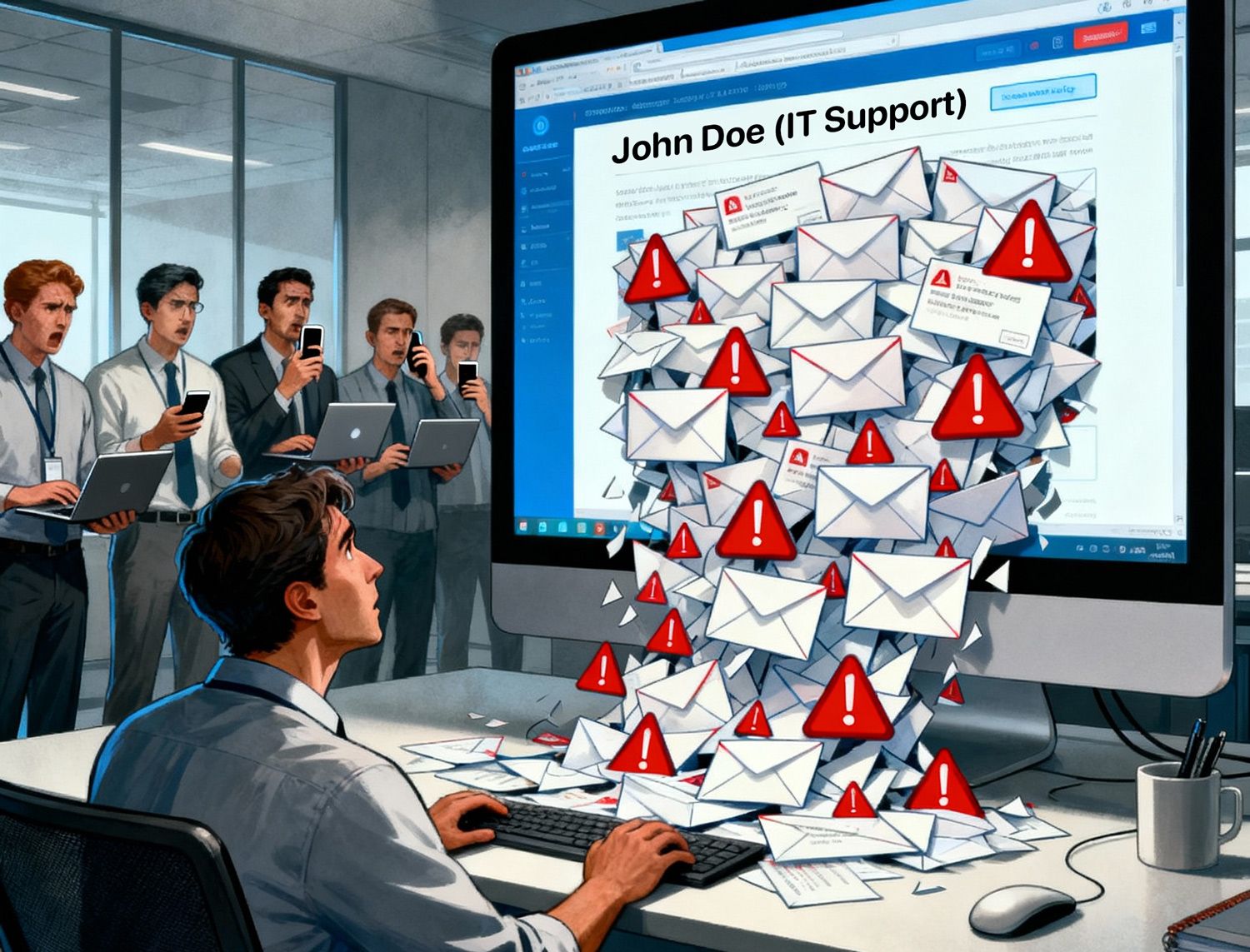
Engineering departments receive a constant stream of internal demands: lab equipment requests, software licence approvals, environment provisioning, design-review sign-offs, procurement authorisations, and access to specialised tools. Without a defined process, these requests land wherever is most convenient — a manager's inbox, a team chat channel, or a sticky note on a monitor.
The result is predictable:
- High-priority requests get lost alongside low-urgency ones
- No visibility into who owns what or how long tasks take
- Duplicate work when two engineers request the same resource
- Audit failures because approvals were verbal or buried in email
- Frustration among engineers who cannot see the status of their own requests
These are exactly the problems ITSM was designed to solve — and they are not unique to IT. The same structured workflow that keeps a service desk running efficiently can be applied to any engineering support function.
What ITSM Looks Like Inside an Engineering Department

Applying ITSM to engineering does not mean turning engineers into IT help-desk agents. It means giving the engineering support function — lab managers, procurement coordinators, technical administrators, and team leads — the same tools and disciplines that IT service desks use every day.
In practice this involves:
- A self-service portal where engineers submit requests for equipment, software, lab time, or access without hunting for the right person to email
- A structured ticket queue that categorises and prioritises incoming requests automatically
- Defined service levels that tell requesters when to expect a response and resolution
- Approval workflows that route procurement or access requests to the right authoriser
- A knowledge base where common requests (how to request a software licence, how to book the test lab) are answered without raising a ticket
This is sometimes called engineering service management or technical service management, but the underlying framework is the same ITIL v4 practices that power modern IT service desks. You can read more about the broader approach on the ITDEVTECH blog.
The Most Common Engineering Request Types
Every engineering team handles a slightly different mix, but the categories that appear most often include:
- Lab equipment reservations and calibration requests
- Hardware procurement and component sourcing
- Software tool and licence requests
- Development or test environment provisioning
- Access requests for version control, CI/CD pipelines, or secure networks
- Design-review scheduling and document-approval workflows
- Vendor or contractor onboarding
- Safety and compliance sign-offs
Each of these maps cleanly onto a standard ITSM request type — service request, change request, or incident — which means an existing ITSM platform can handle them with minimal configuration.
How to Apply ITIL v4 Practices to Engineering Workflows

ITIL v4 is deliberately practice-based rather than prescriptive, which makes it straightforward to adapt to non-IT contexts. The four practices that deliver the most value in an engineering setting are:
Service Request Management
Most engineering demands are service requests: predictable, repeatable asks that do not require a change-control process. Defining a service catalogue for engineering — a menu of things the team can request, each with a clear fulfilment procedure — removes ambiguity and sets realistic expectations. Engineers know what they can ask for, how to ask for it, and when they will get it.
Change Management
Engineering environments change constantly: firmware updates, tool upgrades, configuration changes to test rigs, or modifications to shared lab infrastructure. Uncontrolled changes in these environments cause the same kind of disruption they cause in IT — failed experiments, broken builds, compliance gaps. A lightweight change-management process with defined change types (standard, normal, emergency) prevents this without adding bureaucratic overhead.
Knowledge Management
Engineering teams accumulate enormous amounts of tribal knowledge. When a senior engineer leaves, that knowledge often leaves with them. A structured knowledge base — integrated with the request portal so that relevant articles surface before a ticket is raised — captures procedures, troubleshooting steps, and equipment guides in a searchable, maintained repository.
Asset and Configuration Management
Engineering departments manage significant assets: test equipment, measurement instruments, licensed simulation tools, servers in development labs. Knowing what you have, where it is, and what state it is in is as critical in engineering as it is in IT. Linking asset records to requests and incidents gives you full context — when a piece of lab equipment fails, you can immediately see its maintenance history, warranty status, and which open requests depend on it. The Odysseus endpoint and asset discovery solution can automate the discovery of networked assets in engineering labs, feeding accurate data directly into your asset register.
Building an Engineering Service Desk: A Step-by-Step Checklist

Getting started does not require a lengthy implementation project. Most engineering teams can reach a working state within four to six weeks by following these steps:
- Map your current request types — spend one week logging every request that arrives by any channel and categorise it by type, priority, and typical resolution time
- Define your service catalogue — for each request type, write a simple fulfilment procedure, assign an owner, and set a realistic SLA target
- Configure your request portal — set up intake forms that capture the information needed to fulfil each request type without back-and-forth clarification
- Build approval workflows — identify which request types require a manager, procurement, or safety sign-off and automate the routing
- Migrate your asset data — import existing equipment registers, software licences, and tool inventories into your CMDB so that assets are linked to requests from day one
- Publish a starter knowledge base — document the ten most frequently asked questions as articles and link them from the portal before launch
- Communicate and train — run a short session for the engineering team explaining the portal, what has changed, and what to expect
- Review after 30 days — pull your first metrics report: volume by category, SLA compliance, and average resolution time, then adjust
The TIKTING service management platform supports all of these steps out of the box, with configurable service catalogues, approval workflows, SLA policies, and a built-in knowledge base designed for teams extending ITSM beyond IT.
Metrics That Matter for Engineering Service Management

Once your engineering service desk is running, the same metrics that matter on an IT service desk apply here — with some engineering-specific additions.
Core metrics to track:
- Request volume by category — tells you where demand is concentrated and where to invest in automation or self-service
- SLA compliance rate — the percentage of requests resolved within the agreed target; aim to review any category below 90%
- Average time to fulfilment — baseline this in the first month and use it to measure improvement
- First-contact resolution rate — for requests that can be answered via the knowledge base or portal without human intervention
- Backlog age — flags requests that have stalled, often because an approval is outstanding or a resource is unavailable
- Change success rate — the proportion of engineering changes that complete without causing an incident or requiring rollback
Engineering-specific additions worth tracking:
- Lab equipment utilisation — are shared resources over-subscribed or sitting idle?
- Licence consumption vs entitlement — are you paying for software seats that are not being used?
- Procurement lead time — how long from request submission to equipment in hand?
Reporting on these metrics monthly gives engineering leadership the data to make resourcing decisions based on evidence rather than gut feel.
Frequently Asked Questions
What is ITSM for engineering teams?
ITSM for engineering teams applies IT service management principles — structured request handling, defined workflows, SLAs, and asset management — to the internal support functions of an engineering department. Instead of managing requests by email or chat, engineering teams use a service portal, ticket queues, and approval workflows to handle equipment, software, environment, and access requests consistently.
How is an engineering service desk different from an IT service desk?
The underlying framework is the same, but the request types and assets differ. An engineering service desk handles lab equipment bookings, instrument calibration, simulation software licences, and design-review approvals rather than password resets and hardware replacements. The key ITIL practices — service request management, change management, and knowledge management — apply equally to both.
Which ITIL v4 practices are most useful for engineering departments?
Service request management, change management, knowledge management, and IT asset management deliver the most immediate value. Service request management structures intake; change management controls modifications to shared engineering environments; knowledge management captures tribal knowledge; and asset management tracks equipment and licences with full lifecycle visibility.
How long does it take to set up an engineering service desk?
Most teams reach a working state in four to six weeks. The first two weeks focus on mapping existing request types and defining a service catalogue. Weeks three and four cover portal configuration and asset data migration. The final two weeks involve knowledge base publishing, team training, and a soft launch. Meaningful metrics are usually available after the first 30 days of operation.
Who should own the engineering service desk?
Ownership typically sits with a lab manager, engineering operations lead, or technical programme manager — whoever currently handles the informal coordination of resources and requests. That person works with IT to configure the platform and with engineering leadership to define SLAs and approval policies. IT retains platform administration; engineering owns the content and processes.
Can an existing ITSM platform handle engineering requests, or do you need a separate tool?
An existing ITSM platform is almost always the right choice. Platforms built to ITIL v4 standards support multi-department deployment through configurable service catalogues, separate queues, and role-based access control. Running engineering on the same platform as IT reduces tool sprawl, simplifies reporting, and keeps asset data in a single CMDB rather than siloed spreadsheets.