ITSM for Operations Teams: Streamline Requests and Work Orders in 2026

July 14, 2026
5 min read

Operations teams still run on email and spreadsheets. Learn how ITSM principles — service catalogs, SLAs, and work order workflows — bring structure and visibility to operations.

ITSM for operations teams is one of the fastest-growing applications of enterprise service management in 2026, yet most operations departments still rely on email threads, spreadsheets, and verbal handoffs to manage work requests, maintenance schedules, and cross-team coordination. If your operations team is drowning in untracked requests and missed deadlines, this guide explains how applying ITSM principles outside IT can bring structure, visibility, and accountability to your daily workflows.

Why Operations Teams Struggle Without a Structured Request Process

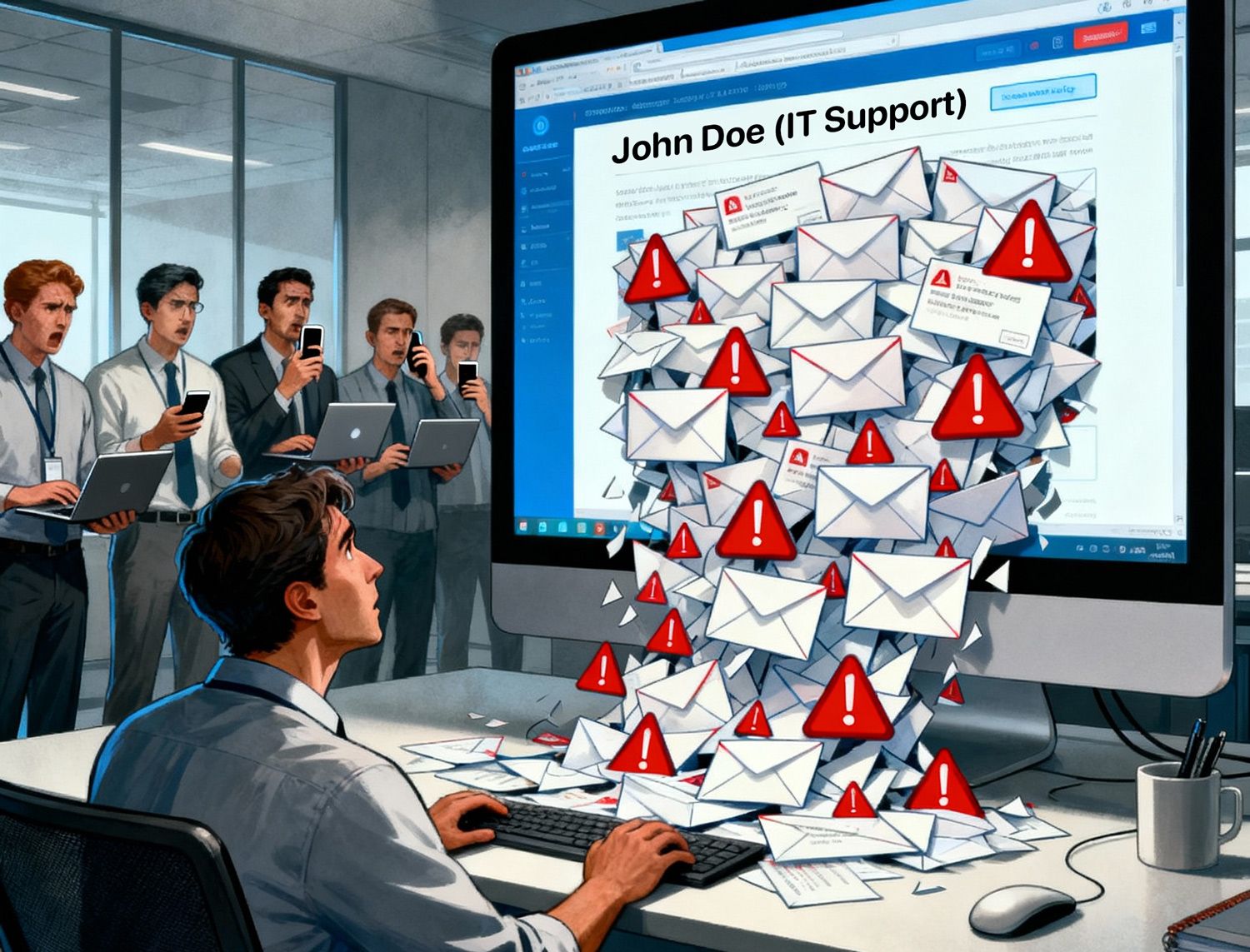
Operations teams handle a relentless mix of work: equipment maintenance requests, supply requisitions, shift handovers, contractor coordination, compliance checks, and internal service requests from every other department. Without a formal process, these tasks arrive through whatever channel is most convenient for the requester — a Slack message, a phone call, a sticky note on a desk.

The result is predictable:

  • Requests get lost or duplicated
  • Priorities are set by whoever shouts loudest, not by actual business impact
  • There is no audit trail when something goes wrong
  • SLAs and response commitments exist only in someone's head
  • Reporting on team performance is impossible

This is exactly the problem ITSM was designed to solve inside IT departments. The principles translate directly to operations: define your services, capture every request in a single system, assign ownership, track status, and measure outcomes.

What ITSM for Operations Actually Looks Like

Blog image

Applying ITSM to an operations team does not mean turning operations staff into IT professionals. It means borrowing the proven structures of ITIL v4 — service catalogs, request management, incident handling, change approvals — and mapping them to the work operations teams already do.

A Service Catalog Built for Operations

The starting point is a service catalog: a plain list of every repeatable service or request type your operations team delivers. Common examples include:

  • Equipment maintenance and repair requests
  • Facility access and key management
  • Consumables and supply replenishment
  • Contractor and vendor coordination
  • Safety inspection scheduling
  • Work order creation and tracking
  • Shift handover documentation

Each catalog item should have a clear owner, a defined response time, and a set of intake fields so the requester provides the right information upfront. This alone eliminates a significant portion of the back-and-forth that wastes time on both sides.

Incident vs. Service Request in an Operations Context

ITIL v4 draws a clear line between an incident (something that is broken or disrupting normal operations) and a service request (a routine ask for something). Operations teams benefit from the same distinction.

A piece of equipment failing mid-shift is an incident. A scheduled maintenance check is a service request. Treating them the same way — and routing them through the same informal channel — means urgent issues get queued behind routine ones, or vice versa.

With a structured ITSM approach, incidents get flagged immediately, routed to the right person, and tracked until resolution. Service requests follow a predictable workflow with agreed turnaround times. You can read more about structuring these workflows in the context of the TIKTING service management platform.

Building a Work Order Management Process That Scales

Blog image

Work orders are the heartbeat of most operations departments. A work order management process built on ITSM principles should cover five stages:

  • Request capture: every work order enters a single system, regardless of how it was raised
  • Triage and prioritisation: work orders are assessed for urgency and impact before assignment
  • Assignment and scheduling: the right technician or team is assigned with a clear due date
  • Execution and updates: progress is logged in the system, not just in someone's head
  • Closure and review: the requester confirms completion and any lessons learned are recorded

This mirrors the IT service request management lifecycle almost exactly. The tooling is the same; only the subject matter changes.

SLAs for Operations Work Orders

One of the most valuable things ITSM brings to operations is SLA discipline. Most operations teams have informal expectations — "we try to get to maintenance requests within 24 hours" — but no formal commitments, no tracking, and no reporting.

Defining SLAs by work order type and priority level changes this. It gives requesters a realistic expectation, gives the operations team a performance target, and gives management a way to measure service quality over time. Start simple: two or three priority tiers with defined response and resolution targets. Refine as you gather data.

Cross-Departmental Coordination and Change Management

Blog image

Operations teams rarely work in isolation. A maintenance window affects production. A supply delivery affects warehouse scheduling. A contractor on-site affects facilities and security. Without a structured handoff process, these dependencies create friction, delays, and occasionally serious disruptions.

ITSM change management principles help here. Before any significant operational change — a planned equipment shutdown, a process change on the production floor, a new vendor being brought on-site — a lightweight change record captures:

  • What is changing and why
  • Which teams or services are affected
  • Who has approved the change
  • What the rollback plan is if something goes wrong

This does not need to be bureaucratic. A simple approval workflow with the right stakeholders copied in is enough for most operational changes. The key is that the record exists, is visible to everyone affected, and is tracked to completion.

For larger or riskier changes, a review step — equivalent to a change advisory board in IT — brings the right people together before work begins. This is especially valuable in manufacturing, production, and logistics environments where unplanned downtime carries a direct financial cost.

Metrics That Tell Operations Managers What Is Actually Happening

Blog image

You cannot improve what you cannot measure. ITSM gives operations teams a ready-made metrics framework. The most useful starting metrics for an operations team moving to a structured ITSM approach are:

  • Work order volume by type and priority — shows where demand is concentrated
  • Average time to assign — reveals bottlenecks in the triage process
  • Average time to resolve by work order type — baseline for SLA setting
  • SLA compliance rate — percentage of work orders resolved within the agreed target
  • Backlog size over time — early warning signal for under-resourcing
  • Requester satisfaction — simple post-closure survey, one or two questions

These metrics are only meaningful if the underlying data is clean, which is why capturing every request in a single system from day one matters so much. Ad hoc tracking in spreadsheets produces data that is too inconsistent to act on.

Operations managers who present these metrics to leadership in a regular report shift the conversation from "we're doing our best" to "here is what we delivered, here is where we need investment." That is a significant change in how operations teams are perceived and resourced.

How to Get Started: A Practical Checklist

Blog image

Moving an operations team onto an ITSM-based approach does not require a big-bang rollout. A phased approach works better and is more likely to stick.

  • Map your current request types: list every category of work your team handles over a typical month
  • Identify your top five to ten repeatable service types and define them as catalog items
  • Agree on priority tiers and draft SLA targets for each — start conservative and tighten over time
  • Choose a platform that supports multi-department service management, not just IT tickets
  • Run a pilot with one request type end-to-end before rolling out to the full catalog
  • Train requesters on how to submit through the portal — adoption depends on the experience being easier than email
  • Review your first month of data: look at volume, SLA performance, and where requests are getting stuck
  • Expand the catalog and refine SLAs based on what you learn

The TIKTING platform is built to support exactly this kind of enterprise service management rollout across departments, with configurable service catalogs, SLA tracking, and workflow automation that operations teams can own without relying on IT to manage every configuration change.

If your operations team also manages physical assets — equipment, tools, vehicles, infrastructure — pairing your ITSM rollout with an asset discovery and tracking solution like Odysseus gives you a connected view of which assets are linked to which work orders, where assets are in their lifecycle, and when maintenance is due.

Key Takeaways

  • Operations teams face the same request management problems IT faced before ITSM: lost requests, no audit trail, inconsistent priorities, and no performance data.
  • Applying ITSM principles — service catalog, request management, SLAs, change management — to operations work creates structure without adding bureaucracy.
  • A work order management process built on ITSM stages (capture, triage, assign, execute, close) scales as demand grows and provides the data needed to justify resourcing decisions.
  • SLA discipline is one of the highest-value quick wins: define targets, track them, and report on them from the start.
  • Cross-departmental change coordination reduces unplanned disruption and gives affected teams visibility before operational changes happen.
  • Start with a small catalog, run a pilot, measure, and expand — adoption is more likely when the process is visibly easier than the old way.

Further Reading

More Articles

IT Service Request Management: A Complete Process Guide for 2026

IT Service Request Management: A Complete Process Guide for 2026

Learn how to build a scalable service request management process — from service catalogue design and fulfilment workflows to SLAs, automation, and CMDB integration.

ITSM for Facilities Management: Run a Smarter Helpdesk in 2026

ITSM for Facilities Management: Run a Smarter Helpdesk in 2026

Learn how ITSM practices — service catalogs, SLAs, and incident management — can transform a reactive facilities team into a structured, measurable operation.

IT Service Level Management: A Practical ITIL v4 Guide for 2026

IT Service Level Management: A Practical ITIL v4 Guide for 2026

IT service level management is more than writing SLAs. Learn how to define targets, build OLAs, run reviews, and drive real improvement with this ITIL v4 guide.

ITSM for Customer Support Teams: Deliver Better Service in 2026

ITSM for Customer Support Teams: Deliver Better Service in 2026

Customer support teams face the same problems ITSM solves. Learn how to apply ITIL practices, SLAs, and automation to deliver faster, more consistent support.

IT Major Incident Management: A Practical Process Guide for 2026

IT Major Incident Management: A Practical Process Guide for 2026

Major incidents need a process of their own. Learn how to declare, manage, communicate, and review major incidents with a practical step-by-step framework.

IT Self-Service Portal Best Practices: Reduce Ticket Volume in 2026

IT Self-Service Portal Best Practices: Reduce Ticket Volume in 2026

Most self-service portals go unused. Learn practical steps to design, populate and promote a portal that genuinely deflects tickets and improves service desk efficiency.

IT Asset Management Best Practices: A Complete 2026 Guide

IT Asset Management Best Practices: A Complete 2026 Guide

Discover the IT asset management best practices that keep your CMDB accurate, license costs controlled, and your IT estate fully visible in 2025.

IT Asset Discovery Tools: How to Choose the Right One in 2026

IT Asset Discovery Tools: How to Choose the Right One in 2026

Choosing the wrong IT asset discovery tool leaves dangerous blind spots. Learn which discovery methods matter, what to evaluate, and how to avoid the most common mistakes.

ITSM Tool Selection: How to Choose the Right Platform in 2026

ITSM Tool Selection: How to Choose the Right Platform in 2026

Choosing the wrong ITSM tool costs years of workarounds. This guide covers requirements, shortlisting, POC testing, and total cost of ownership to help you decide.

ITSM vs ITAM: Key Differences and Why You Need Both in 2026

ITSM vs ITAM: Key Differences and Why You Need Both in 2026

ITSM and ITAM solve different problems, but gaps between them cause incidents, audit risk, and failed changes. Learn the differences and how to connect them.

IT Asset Lifecycle Management: A Complete Guide for 2026

IT Asset Lifecycle Management: A Complete Guide for 2026

Learn the six stages of IT asset lifecycle management, the most common failure points at each stage, and a practical checklist to improve visibility and control.

IT Service Desk Metrics That Actually Matter in 2026

IT Service Desk Metrics That Actually Matter in 2026

Tracking the wrong service desk metrics wastes time and hides real problems. Learn which KPIs actually improve outcomes and how to build a reporting cadence that drives action.

IT Change Management Process: A Step-by-Step Guide for 2026

IT Change Management Process: A Step-by-Step Guide for 2026

A poor IT change management process causes outages and compliance gaps. Learn the ITIL v4 workflow, change types, CAB best practices, and key metrics in this step-by-step guide.

ITSM for Legal Teams: Manage Requests, Contracts and Compliance

ITSM for Legal Teams: Manage Requests, Contracts and Compliance

Legal teams drown in emailed requests with no tracking or accountability. Learn how ITSM brings structure, SLAs and audit-ready workflows to in-house legal operations.

ITSM for Finance Teams: Streamline Requests and Stay Compliant

ITSM for Finance Teams: Streamline Requests and Stay Compliant

Finance teams are internal service providers. Learn how applying ITSM for finance streamlines requests, enforces approvals, and builds the audit trail compliance demands.

ITSM for HR Teams: How to Run HR Service Delivery Like IT

ITSM for HR Teams: How to Run HR Service Delivery Like IT

HR teams drown in email requests with no SLAs, no tracking, and no self-service. Learn how ITSM principles transform HR service delivery step by step.

IT Asset Tracking: How to Know Where Every Asset Is at All Times

IT Asset Tracking: How to Know Where Every Asset Is at All Times

Most IT teams think their asset tracking is reliable — until an audit proves otherwise. Learn how to build a process that stays accurate without manual effort.

IT Mean Time to Resolve: How to Measure and Improve MTTR

IT Mean Time to Resolve: How to Measure and Improve MTTR

MTTR is a critical service desk metric — but most teams measure it wrong. Learn how to calculate, segment, and systematically reduce mean time to resolve.

IT Service Desk Ticket Backlog: How to Clear It and Keep It Clear

IT Service Desk Ticket Backlog: How to Clear It and Keep It Clear

A growing ticket backlog signals a broken support process. Learn how to audit, clear, and prevent your IT service desk backlog with practical steps.

IT Demand Management: How to Plan for IT Work Before It Overwhelms Your Team

IT Demand Management: How to Plan for IT Work Before It Overwhelms Your Team

IT demand management makes all incoming work visible before it overwhelms your team. Learn how to build a practical intake, prioritisation, and planning process.

IT Service Desk Reporting: Build Reports That Drive Real Improvement

IT Service Desk Reporting: Build Reports That Drive Real Improvement

Most service desk reports produce numbers, not decisions. Learn how to build IT service desk reports that drive real improvement across every audience level.

IT Service Desk Shift-Left Strategy: Reduce Escalations and Costs

IT Service Desk Shift-Left Strategy: Reduce Escalations and Costs

Learn how to build a practical shift-left strategy that reduces escalations, improves first-contact resolution, and cuts service desk costs — step by step.

IT Asset Depreciation: How to Track and Plan for End-of-Life Assets

IT Asset Depreciation: How to Track and Plan for End-of-Life Assets

Learn how to track IT asset depreciation, plan hardware end-of-life cycles, and connect retirement workflows to your ITSM process before budget surprises hit.

IT Event Management: How to Cut Noise and Catch What Matters

IT Event Management: How to Cut Noise and Catch What Matters

IT event management turns monitoring noise into actionable signals. Learn how to categorise events, beat alert fatigue, and build a process that catches issues before users do.

IT First Contact Resolution: How to Improve FCR on Your Service Desk

IT First Contact Resolution: How to Improve FCR on Your Service Desk

Low first contact resolution drains your service desk. Learn what causes FCR to drop and the step-by-step process to improve it across your team.

IT Service Desk Automation: What to Automate and Where to Start

IT Service Desk Automation: What to Automate and Where to Start

Learn which service desk tasks to automate first, how to prioritise them, and a practical checklist to reduce ticket volume and improve SLA compliance.

IT Continual Improvement: How to Build a Process That Sticks

IT Continual Improvement: How to Build a Process That Sticks

Continual improvement is central to ITIL v4 but rarely done well. Learn how to build a register, prioritise work, and embed improvement into everyday ITSM.

IT Vendor Management: How to Govern Suppliers and Cut Risk

IT Vendor Management: How to Govern Suppliers and Cut Risk

Ungoverned suppliers cause outages and missed SLAs. Learn how to build a vendor management process that tracks contracts, measures performance, and integrates with ITSM.

IT Capacity Management: How to Plan Before Problems Hit

IT Capacity Management: How to Plan Before Problems Hit

Reactive capacity management causes incidents, SLA breaches, and budget surprises. Learn how to build a proactive process that keeps services ahead of demand.

IT Asset Audit: How to Run One That Actually Finds the Gaps

IT Asset Audit: How to Run One That Actually Finds the Gaps

Learn how to plan and run an IT asset audit that finds real gaps — with a step-by-step process, common failure points, and tips for turning findings into lasting improvements.

IT Availability Management: How to Keep Services Up and SLAs Met

IT Availability Management: How to Keep Services Up and SLAs Met

Learn how to define availability targets, measure uptime accurately, and build a repeatable process that keeps services running and SLAs met.

IT Ticket Prioritization: How to Triage Service Desk Requests Right

IT Ticket Prioritization: How to Triage Service Desk Requests Right

Ad hoc ticket triage causes SLA breaches and burned-out teams. Learn how to build an ITIL-aligned priority framework that scales with your service desk.

IT Configuration Management: Build a CMDB That Drives Real Value

IT Configuration Management: Build a CMDB That Drives Real Value

Most CMDBs fail within months of launch. Learn how to design, populate, and maintain a configuration management practice that teams actually trust and use.

IT Release Management: A Practical Guide for Service Desk Teams

IT Release Management: A Practical Guide for Service Desk Teams

A poorly managed release floods your service desk with incidents. This practical guide covers the full release management process, common mistakes, and a step-by-step checklist.

IT Service Catalog: How to Build One That Actually Gets Used

IT Service Catalog: How to Build One That Actually Gets Used

Learn how to build an IT service catalog users actually adopt — with the right structure, intake forms, fulfillment workflows, SLA targets, and a quarterly review process.

IT Service Continuity Management: A Practical ITSM Guide

IT Service Continuity Management: A Practical ITSM Guide

Learn how to build a practical IT service continuity management programme: BIA, recovery strategies, testing, and how ITSCM connects to your wider ITSM practices.

IT Onboarding and Offboarding: A Service Desk Process Guide

IT Onboarding and Offboarding: A Service Desk Process Guide

Ad hoc onboarding and offboarding leaves accounts open and assets untracked. Learn how to build a repeatable, ITIL-aligned process that closes both gaps.

Shadow IT Discovery: How to Find and Manage Unauthorized Tools

Shadow IT Discovery: How to Find and Manage Unauthorized Tools

Shadow IT grows when users bypass IT to get things done. Learn how to discover unauthorized tools and devices, manage the risk, and fix the root cause.

IT Change Advisory Board: How to Run a CAB That Works

IT Change Advisory Board: How to Run a CAB That Works

A change advisory board only adds value if it's run well. Learn who should attend, how to structure meetings, and which metrics keep your CAB improving.

IT License Compliance: How to Audit and Stay Audit-Ready

IT License Compliance: How to Audit and Stay Audit-Ready

A failed software audit can mean penalties and emergency spend. Learn how to build an IT license compliance programme that keeps you audit-ready year-round.

IT Escalation Management: How to Build a Process That Works

IT Escalation Management: How to Build a Process That Works

A weak escalation process is behind most missed SLAs and burned-out teams. Learn how to design clear tiers, triggers, and workflows that actually hold up.

Network Asset Discovery: How to Find Every Device on Your Network

Network Asset Discovery: How to Find Every Device on Your Network

Network asset discovery finds every device on your network and keeps your CMDB accurate. Learn how it works and how to build a process that lasts.

IT Problem Management: How to Stop Recurring Incidents for Good

IT Problem Management: How to Stop Recurring Incidents for Good

Recurring incidents drain your team. Learn how IT problem management works, the five-step workflow to find root causes, and how to stop the cycle for good.

IT Knowledge Management: Build a Self-Service KB That Reduces Tickets

IT Knowledge Management: Build a Self-Service KB That Reduces Tickets

A dusty wiki nobody reads won't reduce your ticket queue. Learn how to build and maintain a self-service knowledge base that actually deflects tickets.

SLA Management in ITSM: How to Set, Track, and Meet Targets

SLA Management in ITSM: How to Set, Track, and Meet Targets

Missing SLA targets? Learn how to set realistic service level agreements, track compliance in real time, and fix the root causes of breaches in your ITSM environment.

IT Incident Management Best Practices: A Complete Guide

IT Incident Management Best Practices: A Complete Guide

Cut downtime and missed SLAs with these proven IT incident management best practices — from triage and escalation to SLA tracking and post-incident review.

CMDB Best Practices: How to Build and Maintain a Clean CMDB

CMDB Best Practices: How to Build and Maintain a Clean CMDB

A stale CMDB costs your team time and trust. Learn how to scope, build, and maintain a clean CMDB with practical steps and a maintenance checklist.

Why Email-Based IT Support Fails in Large Organizations

Why Email-Based IT Support Fails in Large Organizations

Email-based IT support fails in large organizations due to lost requests, no accountability, poor visibility, and compliance risks. Learn why.

Showcases TIKTING at ITCN Asia 2026 in Lahore

Showcases TIKTING at ITCN Asia 2026 in Lahore

ITDEVTECH showcased its flagship solution TIKTING at ITCN Asia 2026 in Lahore, demonstrating how it streamlines IT operations and empowers organizations.

TIKTING — Enterprise Service Management

Service Desk, Asset Management, Change Management, Remote Support, and more. All-in-one platform.

No credit card required.

Your information is safe and used only to onboard.

On-Premises

Download the Installer and deploy on your own server

Phone Number

Please type the number with the international dialing code (e.g +81)